Clustered lovegrass
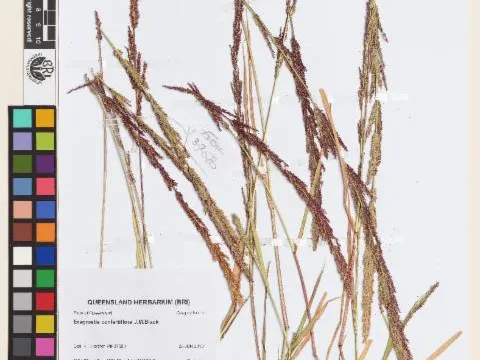
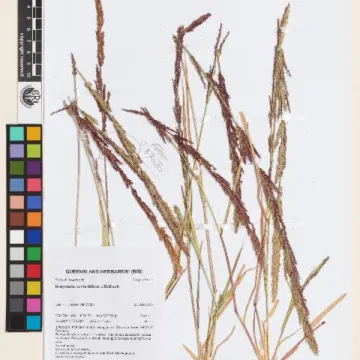
Eragrostis confertiflora
Description
Eragrostis confertiflora, commonly known as clustered lovegrass, is a perennial grass species belonging to the Poaceae family. It is recognized in agricultural circles for its resilience and ability to thrive in harsh environments, making it a valuable resource for grazing and land stabilization.
The origin of this species is traced back to Australia, where it is well-adapted to semi-arid regions. It occupies various ecological niches, ranging from open woodlands to disturbed grasslands, demonstrating a remarkable ability to survive both prolonged droughts and high-temperature stress.
Botanically, the plant is characterized by a dense tufted growth habit and inflorescences with tightly clustered spikelets. Its root system is deep and fibrous, which is a key adaptation for nutrient uptake and soil binding in sandy or rocky terrains, preventing soil degradation in windy areas.
Regarding cultivation requirements, the plant favors well-drained soils and thrives under full sun exposure. It is not highly demanding in terms of soil fertility, although phosphorus application can improve early establishment. Proper agronomic management requires clear fields during germination to avoid competition with weeds, which can suppress the initial growth of seedlings.
The primary economic use of Eragrostis confertiflora involves its role as a forage crop in extensive grazing systems. Its ability to regrow after grazing makes it suitable for livestock management in challenging drylands. Additionally, it is increasingly utilized in ecological restoration projects to stabilize sandy soils and restore degraded natural habitats.
Typical threats to the crop include rust diseases during humid conditions and potential infestations by stem borers or aphids. Integrated pest management, focusing on field rotation and appropriate stocking rates for grazing, is essential to maintain the productivity and health of the stands over the long term.
Photo gallery