
Spreading lovegrass
Eragrostis diffusa
Description
Spreading lovegrass (Eragrostis diffusa) is an annual grass species belonging to the Poaceae family. In agricultural contexts, it is recognized as a forage crop that exhibits remarkable resilience in arid and semi-arid environments, providing essential biomass where traditional forage crops might fail due to environmental stress.
The native habitat of this species is primarily located in North America, spanning the southwestern United States and northern Mexico. It has been cultivated and managed in various regions characterized by limited water availability, where its ability to thrive in harsh climates makes it an important plant for soil stabilization and livestock feed production.
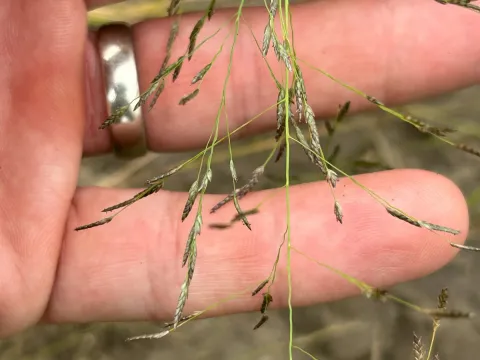
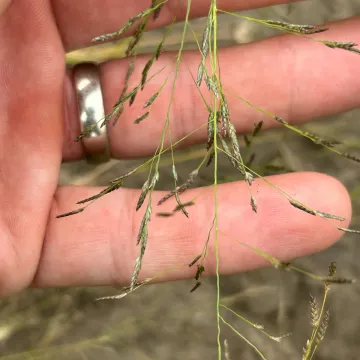
Botanically, this grass is distinguished by its slender culms and delicate, spreading panicles of tiny spikelets. It features a fibrous, robust root system that enables it to efficiently explore soil profiles for moisture. The leaves are narrow and linear, maintaining nutritional value for grazing livestock when harvested at the appropriate phenological stage.
The agronomic requirements for spreading lovegrass center on well-drained, sandy to loamy soils. It is highly intolerant of waterlogged conditions, which can lead to rapid root degradation. Effective cultivation requires precise seedbed preparation and shallow seeding depths to ensure successful germination, as the seeds are extremely small.
The primary agricultural use is as a forage source for grazing animals in rangelands. It is also utilized in conservation efforts to prevent wind erosion in arid fields. While it is a relatively hardy species, growers should remain vigilant against common pests like grasshoppers and fungal pathogens such as rust, especially if humidity levels fluctuate significantly during the peak growing season.
Photo gallery