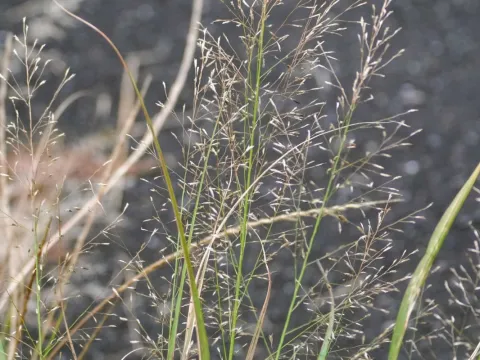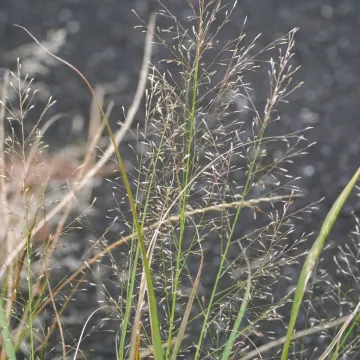
Rusty lovegrass
Eragrostis ferruginea
Description
Rusty lovegrass (Eragrostis ferruginea) is a perennial grass species belonging to the Poaceae family. Recognized for its structural integrity and biomass potential, this species has gained interest in forage production and land stabilization programs, functioning as a resilient component of agricultural ecosystems in specific regions.
The plant originates from East Asia, encompassing regions in China, Japan, and Korea. Historically, it has thrived in diverse environments, from mountainous meadows to open plains. Its natural adaptability to various altitudes and soil types has facilitated its introduction to different agricultural systems where erosion control and sustainable forage sources are required.
Botanically, this species is characterized by its tufted growth habit and slender, linear leaves that often display a distinctive reddish-brown or "rusty" coloration, especially toward the end of the growing season. The inflorescence takes the form of a large, spreading panicle, which provides high seed yields, supporting the plant's natural regeneration and ease of establishment in cultivated fields.
Climate and soil requirements focus on well-drained conditions. While the plant can tolerate a range of pH levels, it performs optimally in fertile, loamy soils with adequate moisture. Agricultural management includes initial seedbed preparation to ensure good soil-to-seed contact, moderate nitrogen fertilization to stimulate leaf growth, and maintenance of weed-free rows during the establishment phase.
- Utilized as a high-volume forage crop for livestock.
- Implemented for soil erosion prevention on slopes.
- Used in land reclamation for degraded grasslands.
- Valued for its drought tolerance in certain environmental settings.
Common agricultural challenges include susceptibility to rust fungi and leaf spots, particularly under conditions of poor air circulation and high humidity. Pest pressures, such as aphids and grass-feeding insects, may require periodic scouting. Effective management involves integrated pest management (IPM) strategies, including timely mowing to disrupt pest life cycles and targeted chemical applications when thresholds are exceeded.
Photo gallery