Gum lovegrass
Eragrostis gummiflua
Description
Gum lovegrass (Eragrostis gummiflua) is a perennial grass species belonging to the family Poaceae. The name of the plant refers to the sticky, resinous exudate found on its stems, a unique biological adaptation that assists the plant in surviving under harsh environmental stress. As an agricultural crop, it is recognized for its robustness and survival capabilities in semi-arid environments.
The native distribution of this species is centered in Southern and Central Africa. It thrives in savannahs and arid scrublands, areas characterized by seasonal rainfall patterns and high temperatures. Due to its natural habitat, the plant has become a subject of interest for agronomists looking for resilient forage options in marginal lands that are unsuitable for traditional cereal crops.
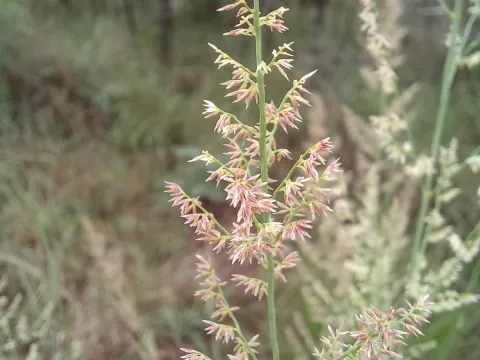
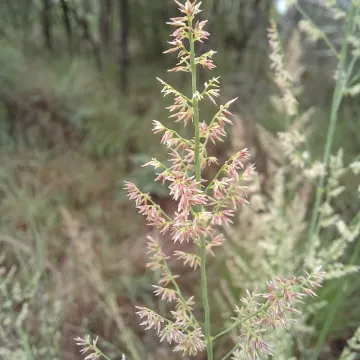
Botanically, this grass forms dense, hardy tufts with an extensive root system that ensures stability and access to deep moisture. The leaves are typically narrow and tough, designed to withstand intense solar radiation. The flowering panicles are resilient and produce numerous seeds, allowing the species to spread efficiently and recolonize degraded soil surfaces where other grasses may fail to establish.
In terms of agricultural requirements, gum lovegrass is notably undemanding. It prefers well-drained, sandy, or rocky soils and requires minimal human intervention once established. Agronomic management focuses on preventing overgrazing in the first stages of growth and ensuring that the plant has enough space to develop its characteristic tussock structure, which protects the soil surface from erosion.
The primary economic uses for this crop include:
- Providing a reliable forage source in drought-prone regions.
- Soil stabilization and conservation on fragile landscapes.
- Recovery of degraded pastoral lands through natural seeding.
- Enhancement of biomass production in areas with low water availability.
While gum lovegrass is remarkably hardy, it can be susceptible to certain pests like grasshoppers or fungal infections during prolonged periods of humidity. However, the species' natural defenses and high level of adaptability make it a relatively low-maintenance option for land managers. Proper monitoring and rotational grazing help maintain a healthy, long-lasting stand of this valuable grass.
Photo gallery