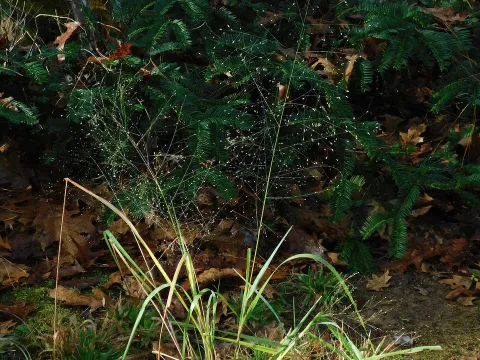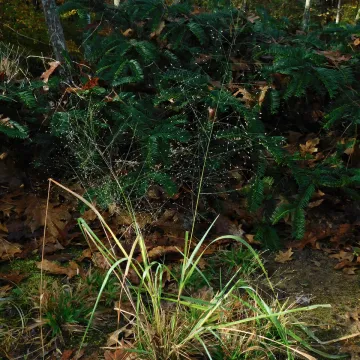
Hairy lovegrass
Eragrostis hirsuta
Description
Hairy lovegrass (Eragrostis hirsuta) is a perennial grass species belonging to the Poaceae family. Recognized for its unique appearance, this grass features distinctively hairy leaf blades, a trait that gives it both its scientific and common names. It serves as a resilient component in various agricultural landscapes, particularly in dry and nutrient-poor environments.
Native to North America, this species is naturally found in prairies and open, sunny areas. Its historical adaptation to harsh, unpredictable climates has made it a valuable species for range management. Over time, it has been utilized in agricultural settings as a forage grass that provides reliable biomass where other more demanding species might fail to establish.
Botanically, Hairy lovegrass is characterized by a clumping growth habit, producing stems that can reach up to 1.2 meters in height. The inflorescence is a panicle, often appearing open and spreading, which aids in wind-based seed dispersal. The roots are deeply seated, allowing the plant to reach moisture reserves deep within the soil profile during dry spells.
Regarding cultivation, the species is relatively low-maintenance, showing a strong preference for well-drained, sandy or gravelly soils. It is highly drought-tolerant and does not require extensive fertilization to maintain vigor. Proper management involves timely grazing or mowing to ensure the forage remains in a vegetative, palatable state, preventing the plant from becoming too lignified.
The primary agricultural use for Hairy lovegrass is as forage for livestock, particularly in arid regions where pasture diversity is limited. It provides a stable ground cover that protects soil from erosion. While generally hardy, the crop is susceptible to certain agricultural issues:
- Rust diseases may occur under conditions of high humidity or poor air circulation.
- Aphid infestations can occasionally stunt growth during the peak growing season.
- Invasive species may compete for space if the grass stand density is not properly maintained.
Photo gallery