Eragrostis lacunaria
Eragrostis lacunaria
Description
Eragrostis lacunaria is a perennial grass species belonging to the Poaceae family. Recognized for its remarkable resilience, this species serves as a valuable genetic resource for improving forage production in arid and semi-arid environments across the globe.
Originating from the diverse landscapes of Australia, Eragrostis lacunaria has adapted to survive in harsh conditions characterized by erratic rainfall and nutrient-poor, sandy soils. Its evolutionary history has endowed it with deep root systems and metabolic efficiency that ensure survival during prolonged dry spells.
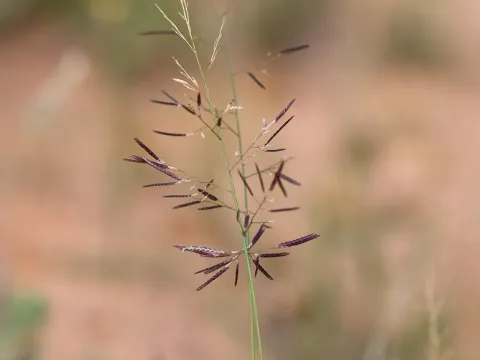
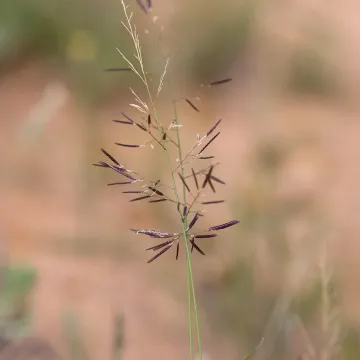
Botanically, the plant features a dense tufted growth habit with slender leaves and characteristic panicle inflorescences. This architectural structure allows it to minimize water loss through transpiration while providing ground cover that protects the soil surface from high temperatures and mechanical damage.
Cultivation requirements for Eragrostis lacunaria center on soil drainage and thermal stability. The grass performs best in well-drained sandy or loamy soils and requires minimal nutritional input. While it thrives under natural rainfall patterns, supplemental irrigation during the establishment phase can significantly increase biomass yield.
The agricultural and environmental utility of this species is significant:
- Provides reliable forage for livestock in arid zones.
- Functions as an effective soil stabilizer in erosion-prone areas.
- Contributes to land rehabilitation and desertification control.
- Acts as a vital component in biodiversity restoration projects.
Regarding pest and disease management, the plant displays high levels of natural immunity compared to domesticated cereal crops. Most issues arise from improper management, such as overgrazing or poor site selection, emphasizing the importance of site-specific agronomic assessment before large-scale implementation.
Photo gallery