Mexican lovegrass
Eragrostis mexicana
Description
Mexican lovegrass (Eragrostis mexicana) is an annual grass species belonging to the Poaceae family. Known for its ability to thrive in harsh, arid environments, this species is increasingly recognized in agricultural circles for its resilience and biomass production capacity in regions with limited rainfall. It represents a vital component in local grassland ecosystems and has potential for agricultural integration in similar climates.
The native range of the plant is primarily in North and Central America, specifically Mexico and the southwestern United States. It has evolved to survive in diverse habitats, ranging from sandy plains to rocky slopes, displaying high genetic plasticity. Its ability to tolerate low soil fertility and high temperature fluctuations makes it a robust candidate for cultivation in marginal lands where traditional cereal crops often fail.
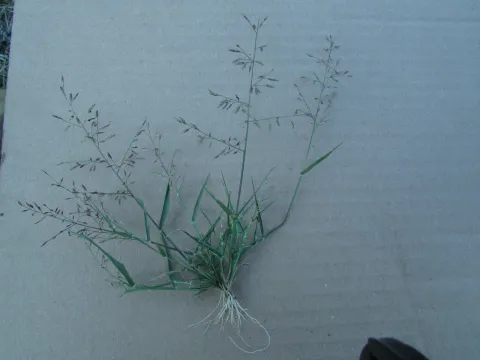
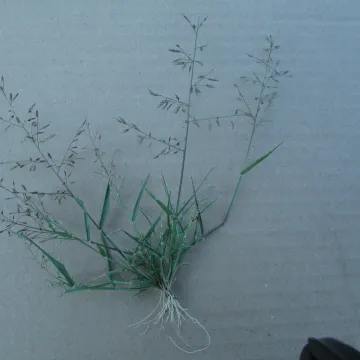
Botanically, Eragrostis mexicana features a tufted growth habit with slender leaves and delicate, open panicle inflorescences. The root system is fibrous and deep-reaching relative to the plant size, allowing for efficient soil moisture extraction. The plant typically reaches heights of 30 to 80 cm, providing adequate forage yield in favorable conditions, and it is capable of completing its lifecycle rapidly during the peak growing season.
In terms of agricultural requirements, the crop demands full sunlight and exceptional soil drainage. It is highly sensitive to waterlogging, which can trigger fungal pathogens. Agronomic practices focus on surface sowing, as the seeds are quite small and require minimal soil coverage. It is generally undemanding in terms of nutrient input, yet nitrogen application can significantly boost biomass production in degraded soils.
The primary economic use is as a forage crop, both as grazed pasture and harvested hay. Its inclusion in pastoral systems helps in restoring soil health and preventing wind erosion in arid landscapes. While generally hardy, the crop is susceptible to common grass pests such as aphids and, under improper management, various leaf spot diseases. Constant monitoring and appropriate spacing are essential to ensure the vitality of the stands.
Photo gallery