Eragrostis papposa
Eragrostis papposa
Description
Eragrostis papposa is a perennial grass species belonging to the Poaceae family. Known for its remarkable resilience, this species is a key plant in arid and semi-arid regions. In agricultural science, it is considered a strategic crop for marginal lands where standard forage grasses fail to thrive due to lack of moisture or nutrient-poor soils.
The species originates from the Arabian Peninsula and Northern Africa. Its native range is characterized by hot, dry climates where Eragrostis papposa acts as a crucial stabilizer for sandy soils and dunes. The plant has been successfully integrated into various farming systems aimed at restoring degraded lands and providing a reliable source of green matter in harsh desert-bordering environments.
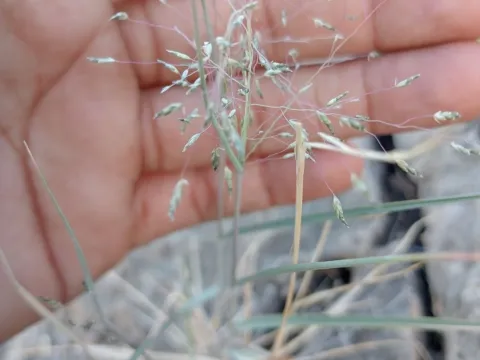
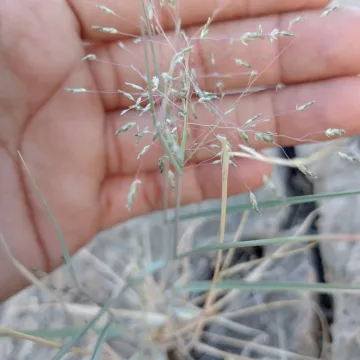
Botanically, this grass is distinguished by a dense tufted growth habit and a deep-reaching root system. The leaves are narrow and sclerophyllous, an evolutionary adaptation that prevents water loss during periods of intense heat. The panicle-type inflorescence produces numerous seeds, which are highly effective at recolonizing barren ground, especially after occasional rainfall events.
Regarding cultivation, Eragrostis papposa thrives in well-drained, sandy, or stony substrates. It requires minimal fertilizer inputs as it is adapted to low-fertility soils. Agronomic practices should focus on preventing overgrazing during the establishment year to allow the root system to fully develop. Once established, the grass is highly resistant to drought and can withstand high levels of salinity compared to more delicate forage crops.
The primary economic use is as forage for livestock, particularly sheep and goats in nomadic or extensive grazing systems. Furthermore, its role in ecological restoration is significant; it is frequently utilized in soil conservation projects to prevent desertification and wind erosion. The ability of this grass to maintain cover throughout the year provides an essential service to both farmers and the surrounding ecosystem.
Common phytosanitary concerns include:
- rust fungi during periods of unseasonable humidity;
- locust infestations which can lead to rapid biomass loss;
- root-knot nematodes that impact growth in infested soils;
- competition from opportunistic weeds in the early stages of field establishment.
Photo gallery