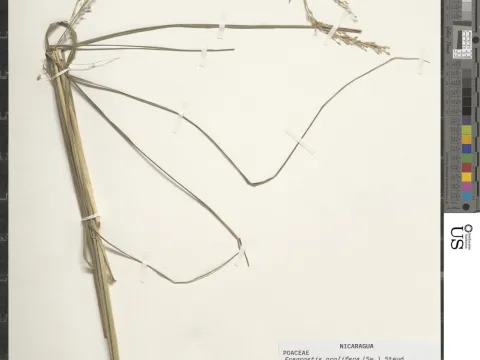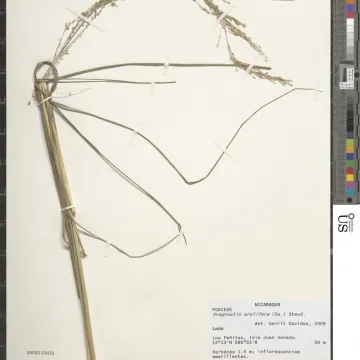

Eragrostis prolifera
Eragrostis prolifera
Description
Eragrostis prolifera is a perennial grass species belonging to the Poaceae family. Known for its remarkable resilience, this crop is particularly noted for its ability to thrive in harsh environments, including areas characterized by low water availability and poor soil conditions.
The native distribution of this plant includes tropical and subtropical regions. It is frequently found in coastal zones and sandy terrains, where its biological features allow it to withstand saline conditions better than many traditional forage crops, making it a valuable resource for land reclamation projects.
Botanically, the plant features a robust root system and upright culms with narrow, resilient leaves. The inflorescence is typically a panicle containing numerous small spikelets. This structure ensures efficient seed dispersal and adaptation to windy environments, contributing to the plant's survival in its natural habitat.
In terms of agricultural requirements, the crop demands full sunlight and thrives in well-drained soils. While it is highly tolerant of drought, supplemental irrigation and nitrogen-based fertilization during the initial growth stages can significantly enhance total biomass production. Proper spacing is essential to maintain plant health and prevent the spread of diseases.
The primary agricultural use of this species is as a source of forage for livestock, particularly in arid climates where other grasses struggle to grow. Beyond its fodder value, the plant is extensively used for soil stabilization and the prevention of erosion in vulnerable areas. Common pests may include grasshoppers and certain insects, though the plant generally exhibits strong resistance to many endemic agricultural pathogens.
Photo gallery