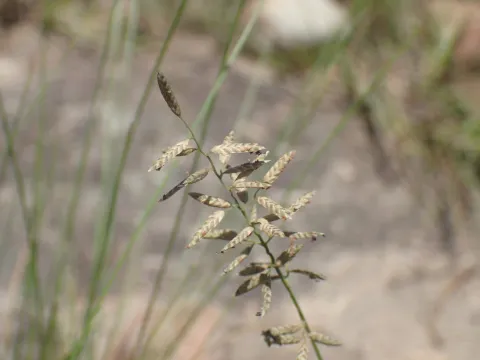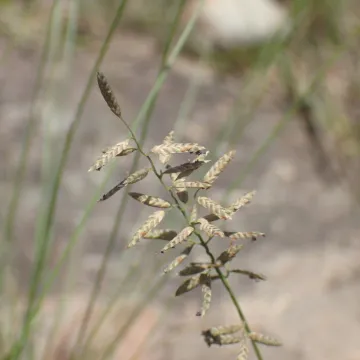
Racemose lovegrass
Eragrostis racemosa
Description
Racemose lovegrass (Latin: Eragrostis racemosa) is a perennial grass species belonging to the Poaceae family. This plant is recognized for its vital role in rangeland ecosystems and its suitability for sustainable agricultural systems in semi-arid environments.
Native to African landscapes, this species is well-adapted to the climatic conditions of savannahs and high-altitude grasslands. Its range of cultivation has expanded due to its reputation as a hardy plant capable of thriving in diverse, often challenging tropical and subtropical habitats.
The plant exhibits distinctive botanical traits, including a tufted growth habit and a robust root system that stabilizes soil structures. Its inflorescences are characterized by dense, spike-like panicles, which distinguish it from other related species within the Eragrostis genus.
Regarding cultivation requirements, the plant prefers well-drained soils and thrives under full sunlight. It is highly resistant to drought, making it an excellent candidate for regions where water resources for agriculture are limited. Standard agronomic practices focus on maintaining optimal plant density.
The primary economic use is as a forage resource for livestock, particularly in extensive grazing systems.
- Excellent resistance to grazing pressure
- High nutritional value during the vegetative stage
- Significant contribution to soil erosion prevention
- Rapid recovery after cutting or fire events
Typical pests and diseases include various leaf-spotting fungi that appear during periods of high humidity and occasional insect infestations. Effective management involves moderate stocking rates and careful monitoring of the grass stand health to ensure long-term pasture productivity.
Photo gallery