Purple lovegrass
Eragrostis spectabilis
Description
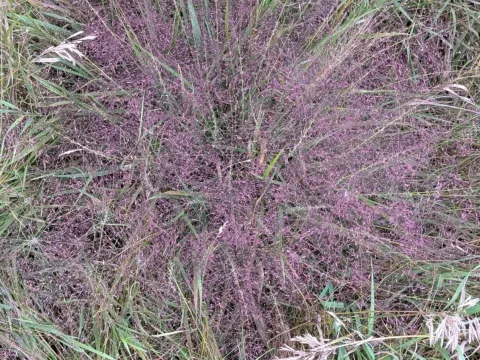
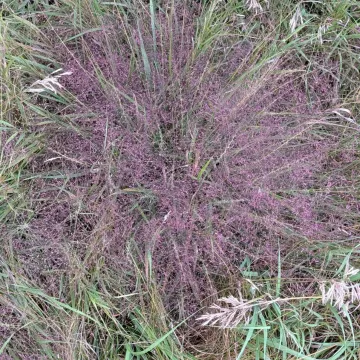
Purple lovegrass (Latin Eragrostis spectabilis) is a perennial grass species belonging to the Poaceae family. Recognized for its ornamental appeal and rugged nature, this warm-season grass is native to North America, where it thrives in open, sandy environments and dry prairies.
The plant has a broad natural range across the United States, which speaks to its adaptability to varying environmental stressors. Unlike many common forage crops, this grass is prized primarily for its resilience in challenging soil conditions where moisture is limited and soil nutrients are low.
Botanically, it forms dense, tufted clumps of narrow, rigid leaves. During late summer, the plant produces distinctive, cloud-like inflorescences that transition into a vibrant reddish-purple color. As temperatures cool in the autumn, the foliage itself often turns a rich bronze or copper hue, providing extended visual interest.
Cultivation requirements for Eragrostis spectabilis are minimal. It requires full sun exposure and well-drained, sandy, or gravelly soils to thrive. It is exceptionally drought-tolerant once established and does not require fertilization. Routine maintenance is limited to a single annual cutback of the dormant foliage in late winter or early spring.
From a functional perspective, purple lovegrass is utilized in sustainable landscaping, erosion control on sandy embankments, and as a component of native meadow restorations. It is highly resistant to common pests and plant diseases, making it a low-input crop suitable for areas where chemical management is neither desired nor feasible. The plant's ability to stabilize soil makes it an essential species for land conservation efforts in its native range.
Photo gallery