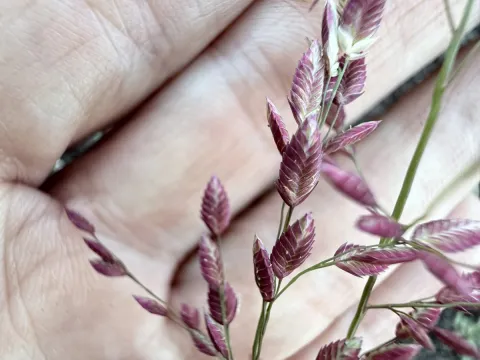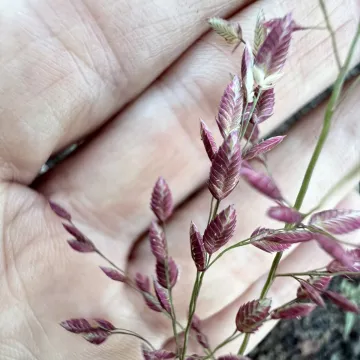
Chinese lovegrass
Eragrostis unioloides
Description
Chinese lovegrass (Eragrostis unioloides) is a perennial grass belonging to the Poaceae family. This species is recognized for its agricultural value, primarily functioning as a nutritious forage crop that thrives in warm climates across tropical and subtropical regions globally.
Originating from parts of Asia and Africa, this grass has successfully naturalized in many regions with similar ecological profiles. It is widely valued by farmers for its resilience and ability to provide consistent green fodder in areas that may not support more demanding agricultural crops.
Botanically, the plant develops loose tufts with slender stems and distinctive, flattened, often purple-tinged panicles. These inflorescences are not only functional for reproduction but also give the plant a visually appealing structure. The root system is robust, allowing the grass to efficiently stabilize soil and extract moisture effectively.
Successful cultivation requires warm temperatures and full sun exposure. The crop thrives in light, sandy, or loamy soils and is known for its tolerance to low-fertility conditions. Agronomic practices emphasize the need for adequate drainage and timely harvesting, which helps stimulate healthy regrowth throughout the growing season.
- High adaptation to nutrient-poor soils.
- Good palatability for grazing livestock.
- Excellent regrowth capabilities post-mowing.
- Low maintenance compared to intensive forage varieties.
The primary use of this crop is for livestock grazing and hay production. While generally resistant to major pests, farmers should monitor for fungal diseases that can occur in conditions of extreme humidity. Proper field sanitation and avoiding waterlogging remain the best preventative strategies for maintaining a healthy stand of Chinese lovegrass.
Photo gallery