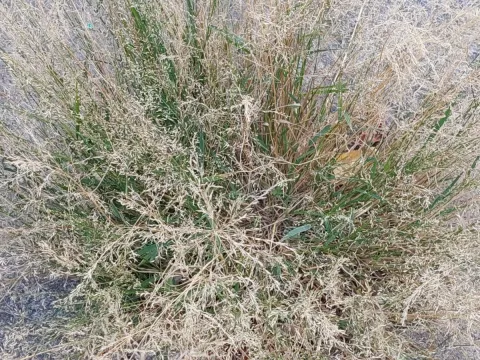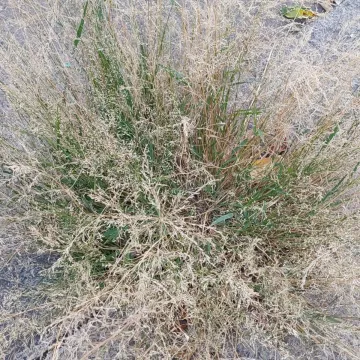
Brazilian lovegrass
Eragrostis virescens
Description
Brazilian lovegrass (Eragrostis virescens) is an annual grass species belonging to the Poaceae family. Known for its robust growth habit and environmental adaptability, this plant has gained attention as a reliable forage source in various agricultural systems across the globe, providing consistent biomass production for livestock feeding.
Originally native to South America, the species has successfully naturalized in many regions with temperate and subtropical climates. Its distribution range continues to expand as agricultural managers seek hardy, drought-tolerant grasses that can thrive on marginal lands where other cereal crops might struggle to produce sufficient yields.
Botanically, the plant is characterized by its slender, leafy stems and characteristic greenish-tinged panicles. Its root system is relatively fibrous and deep, which grants the plant a degree of resilience against dry spells and helps in maintaining soil structure. The leaf blades are narrow and tend to remain succulent during the early stages of growth.
In terms of agronomy, Eragrostis virescens prefers well-drained soils with moderate fertility. Cultivation practices should focus on shallow seeding depths and ensuring that the field is free from aggressive weed competition during the establishment phase. While it does not require intensive irrigation, it responds well to moisture during the peak growing season.
The primary use of the crop is for hay production and grazing, as it offers a balanced nutritional profile for livestock. Common plant health issues include occasional rust infections if conditions become too humid and standard pressure from aphids, which can be mitigated through proper field density management and crop rotation strategies to prevent build-up.
Photo gallery