Blue Sage
Eranthemum pulchellum
Description
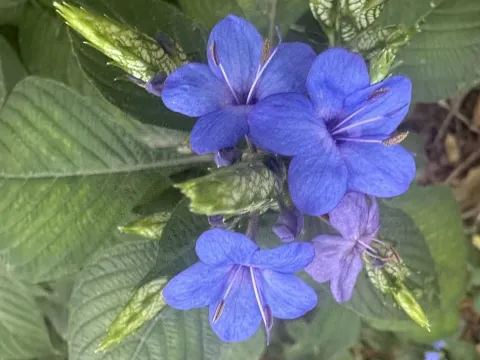
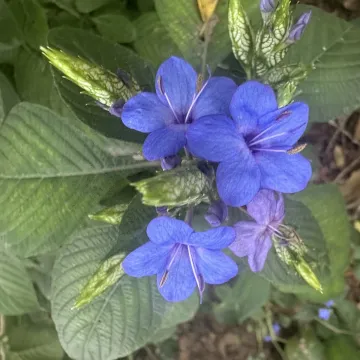
Eranthemum pulchellum, commonly referred to as the Blue Sage, is a prominent shrub within the Acanthaceae family. It is widely recognized by botanists and horticulturists for its spectacular, deep blue, tubular flowers that bloom in terminal spikes, providing a vivid splash of color against a backdrop of deep, textured foliage.
The plant originates from the tropical regions of India and the Himalayas. In its natural habitat, it thrives in the dappled sunlight of tropical forests, where humidity remains consistently high. Today, it is cultivated globally in tropical regions as an ornamental garden plant, while in temperate zones, it is highly sought after for indoor botanical collections and conservatories.
Botanically, Eranthemum pulchellum is characterized by its ovate, dark green leaves which feature prominent venation. The plant can reach up to four feet in height if left unpruned. Its flowers are distinct, with five lobes and a striking azure hue, appearing primarily during the winter months, which makes it a valuable species for extending the flowering season in controlled environments.
Successful cultivation of this species requires a warm, sheltered environment. It demands a nutrient-rich, moist, and well-draining soil mix. During the growth cycle, the plant requires consistent moisture and protection from direct, intense sunlight, which can cause leaf scorch. Regular pruning is essential not only to maintain a compact form but also to stimulate the growth of new flowering stems.
- Maintenance of 60% or higher relative humidity for optimal health.
- Regular fertilization during the peak growth phase (spring to autumn).
- Propagation via semi-hardwood cuttings under warm, humid conditions.
- Critical requirement for moderate temperatures between 18°C and 25°C.
In terms of plant protection, the Blue Sage is susceptible to common greenhouse pests, including mealybugs, spider mites, and scale insects. Maintaining high hygiene standards and proper air circulation significantly reduces the risk of infestation. As a decorative crop, it remains an excellent choice for landscape design in tropical areas and as a statement piece in interior plant displays.
Photo gallery