Winter Aconite
Eranthis cilicica
Description
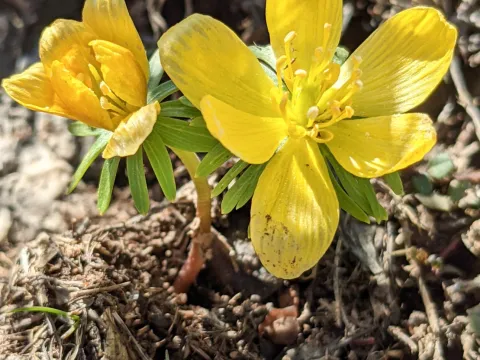
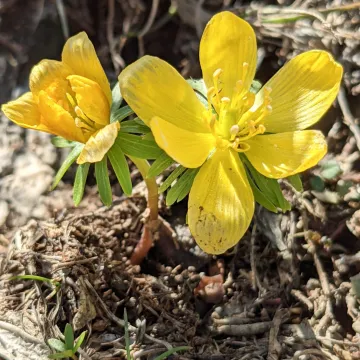
Winter Aconite (Eranthis cilicica) is a perennial herbaceous plant belonging to the Ranunculaceae family. It is widely recognized for its vibrant yellow blossoms that emerge in late winter or early spring, often pushing through the melting snow with remarkable resilience.
Originating from the mountainous regions of Asia Minor, specifically Cilicia, this species is naturally adapted to limestone soils and woodland margins. This evolutionary history dictates its preference for sites that mimic its native habitat, offering both moisture during the spring growth phase and dry conditions during its summer dormancy.
The botanical structure is characterized by a tuberous root system from which spring bronze-tinted, deeply divided leaves. Each solitary flower is subtended by an intricate involucre of leaf-like bracts, which provides a distinctive ornamental appearance compared to other early spring bulbous species.
Cultivation requires well-draining, humus-rich soil with a neutral to slightly alkaline pH. Planting should occur in late summer, with tubers placed at a depth of 5 cm. Providing a position in dappled shade is essential, as the plants require protection from the intense summer sun while dormant to ensure they survive until the following season.
In terms of usage, the plant is primarily ornamental, serving as an excellent groundcover for rock gardens, woodland borders, and alpine beds. Its early bloom time makes it a valuable addition to gardens seeking to extend the flowering season, providing color when most other perennials are dormant.
Common health issues include:
- Root rot triggered by poor soil drainage.
- Infestation by slugs and snails that target young leaves.
- Susceptibility to viral diseases leading to stunted growth or leaf spotting.
Photo gallery