Description
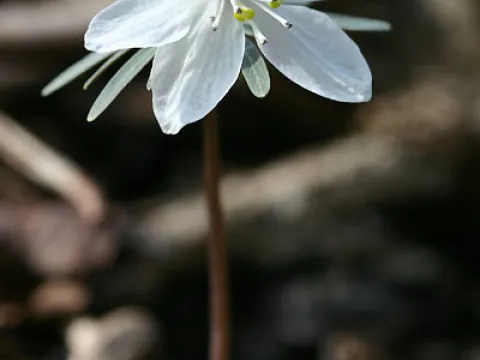
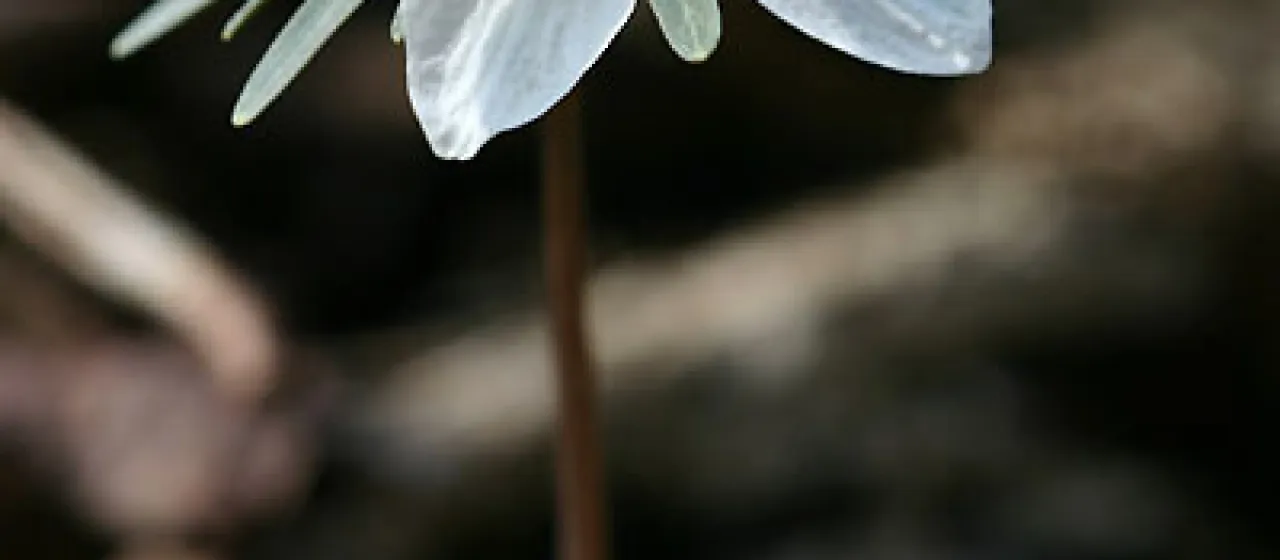
Eranthis pinnatifida is a perennial herbaceous plant belonging to the Ranunculaceae family. Commonly referred to as a species of winter aconite, it is highly prized by collectors for its early spring blooming cycle and delicate appearance, which distinguishes it from the more common yellow-flowered varieties.
Native to the mountainous forest regions of Honshu, Japan, this plant thrives in cool, sheltered environments. Its natural habitat dictates its specific needs, as it is adapted to life under deciduous trees where it receives sunlight only before the canopy fully leafs out. Its white petals and distinct purple anthers make it a unique addition to any garden.
Botanically, the plant grows from a small tuber that stores energy for its brief, intense growing season. The foliage is characteristically pinnatifid, or finely divided, providing a lace-like texture that complements the solitary flowers. Because of its ephemeral nature, the plant goes dormant shortly after producing seeds, disappearing entirely by early summer.
Successful cultivation requires a location with well-draining soil that is rich in leaf mold and organic matter. Unlike many other bulbs, it demands consistent moisture during its growing period but needs a relatively dry environment once the foliage dies back. It performs best in partial shade, mimicking the conditions of the woodland floor.
Maintenance involves monitoring for common bulb issues, particularly fungal pathogens such as gray mold (Botrytis), which can proliferate if drainage is inadequate. Pests such as slugs and voles may also target emerging shoots. Providing adequate spacing and ensuring the soil does not become waterlogged is the primary strategy for preventing losses in this sensitive species.
Photo gallery