American burnweed
Erechtites hieracifolia
Description
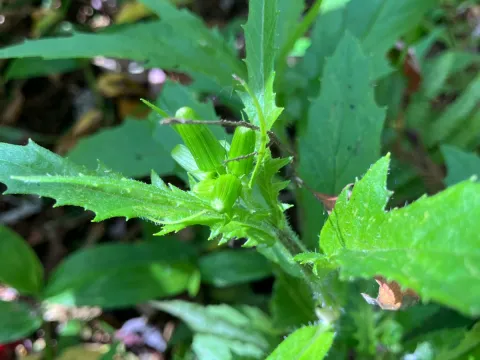
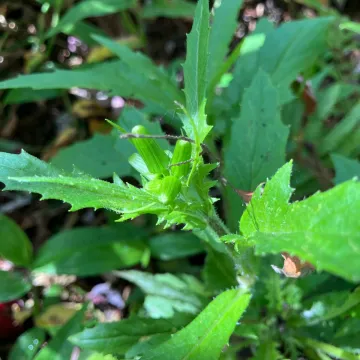
American burnweed (Erechtites hieracifolia) is an annual herbaceous plant belonging to the Asteraceae family. This species is frequently found in disturbed areas, such as forest clearings or fields, where its rapid colonization and growth provide it with a competitive advantage over other vegetation types.
Native to North America, the plant has successfully spread across various global regions with temperate climates. Its common name, burnweed, reflects its ecological habit of flourishing in the rich soil of areas that have recently experienced fire or land clearing. This adaptive trait makes it a subject of interest for both restoration ecology and potential commercial agricultural use.
Botanically, the plant is characterized by a stout, succulent-like stem that can reach heights of 2 meters or more. The leaves are alternate, simple, and often lanceolate with irregularly serrated margins. Small white or cream-colored flower heads are clustered at the top of the plant. After fertilization, the seeds develop a white pappus, allowing for widespread dispersal via air currents.
Cultivation requirements for American burnweed center on moisture and soil fertility. It thrives best in well-drained but consistently damp, nutrient-rich soils. In an agricultural setting, site preparation should focus on removing initial weed competition, as the seedlings are delicate. Providing adequate spacing and sunlight is crucial for maximizing biomass production, as the plant responds positively to high light intensity.
- Requires consistent soil moisture for optimal growth.
- Thrives in nitrogen-rich, slightly acidic soil environments.
- Responsive to organic fertilization methods.
- Susceptible to aphids during the early vegetative stage.
Regarding its economic value, the plant is valued for its potential in producing secondary metabolites, including essential oils with medicinal properties. While it is not a traditional mass-produced crop, it is gaining recognition in herbal medicine circles. Managing common pests like aphids and preventing fungal root issues through proper irrigation and aeration are essential for a successful harvest of this botanical species.
Photo gallery