Description
Erica albens is a notable perennial evergreen shrub belonging to the Ericaceae family. In agricultural and horticultural practices, this plant is recognized for its refined morphological features and its specific environmental requirements, making it a subject of interest for specialized nursery production and landscape development.
The origin of Erica albens is rooted in the South African region, specifically within the Cape Floral Kingdom. Its native distribution indicates a strong adaptation to well-drained, acidic soils and Mediterranean-like climatic conditions. Understanding these origins is critical for successful cultivation in various agricultural settings across the globe.
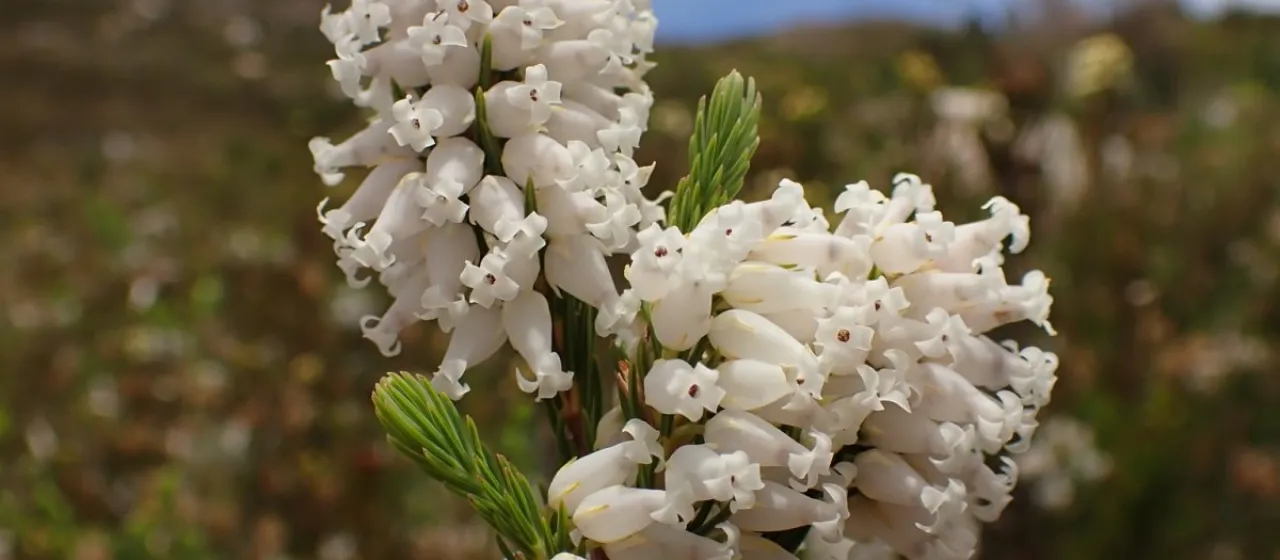
Botanically, the plant is characterized by its linear, needle-like foliage and small, tubular white flowers that appear in terminal clusters. These structures allow the plant to thrive in nutrient-poor but aerated substrates. The growth habit is generally compact, requiring minimal structural support but careful attention to spacing to ensure adequate light exposure.
Agronomic management of Erica albens focuses heavily on soil chemistry and moisture control. It requires an acidic pH, typically ranging between 4.5 and 5.5. Irrigation must be managed with precision; while the plants need consistent moisture to establish, waterlogged soil can lead to rapid root decline and susceptibility to pathogens, necessitating excellent drainage systems.
Regarding health management, common threats include phytophthora root rot and infestations by mites or scale insects. Integrated pest management strategies, focusing on site sanitation and proper spacing, are essential to maintaining plant vitality. In commercial production, regular pruning post-flowering is a standard practice to enhance foliage density and future bloom production for the ornamental market.
Photo gallery