Description
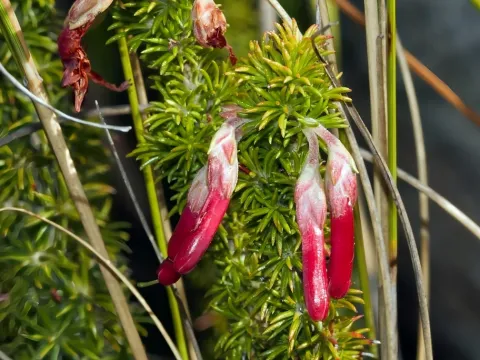
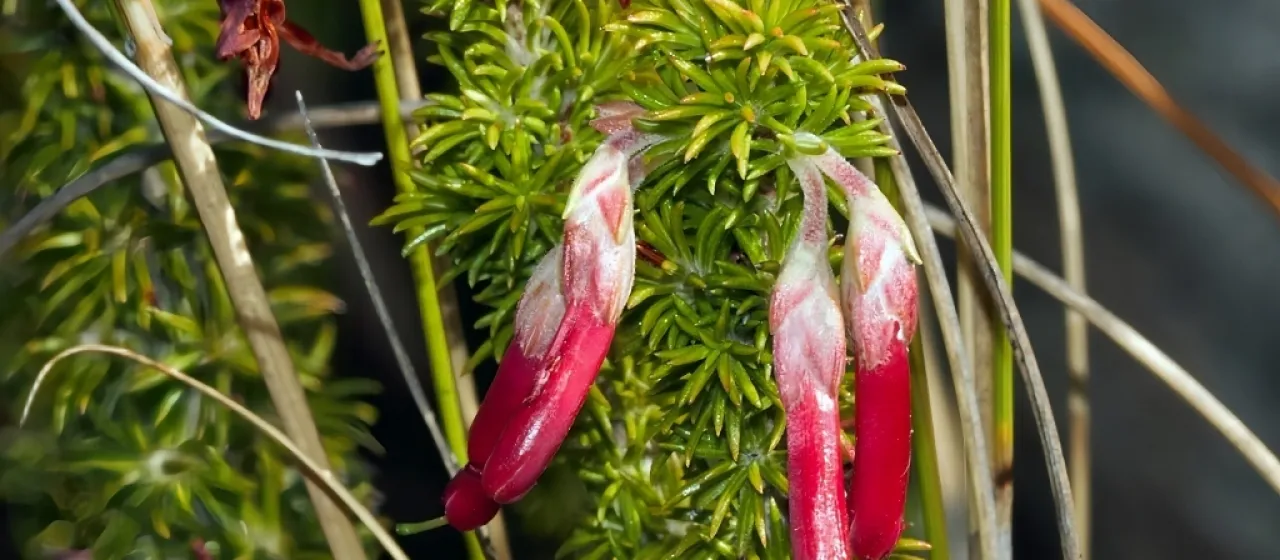
Scarlet heath (Erica coccinea) is a perennial evergreen shrub belonging to the Ericaceae family. In agricultural and horticultural terms, it is considered a specialty ornamental crop. The plant is highly valued for its striking, tubular red flowers and its unique biological adaptation to nutrient-poor soils, making it an interesting subject for professional nurseries and floriculture.
The species is native to the Cape Floristic Region of South Africa. Its natural habitat includes rocky slopes and mountain fynbos, where it experiences specific seasonal climate variations. As a cultivated plant, it requires protected growing environments in regions that do not match its native climatic conditions, specifically regarding winter temperatures and air humidity levels.
Botanically, Erica coccinea is characterized by a compact, upright growth habit. Its foliage consists of small, needle-like leaves arranged in whorls along the stem. The inflorescences are distinct, with brilliant red to orange flowers that stand out against the greenery. The plant relies on specialized soil micro-organisms and requires highly specific conditions to reach its reproductive potential.
Effective agrotechnical practices for this species focus on soil acidity and drainage. It requires a substrate with a low pH and excellent drainage properties to prevent root suffocation. Fertilization must be managed carefully, as the species is sensitive to high concentrations of dissolved salts and alkaline water, which can quickly lead to physiological stress and stunted development.
In terms of management and protection, growers must be vigilant against common challenges that affect ericaceous plants in controlled environments:
- Root rot caused by Phytophthora species under damp conditions.
- Spider mites that thrive in warm, low-humidity greenhouse environments.
- Nutrient imbalances, particularly iron deficiency (chlorosis), caused by high soil pH.
Photo gallery