Erica curviflora
Erica curviflora
Description
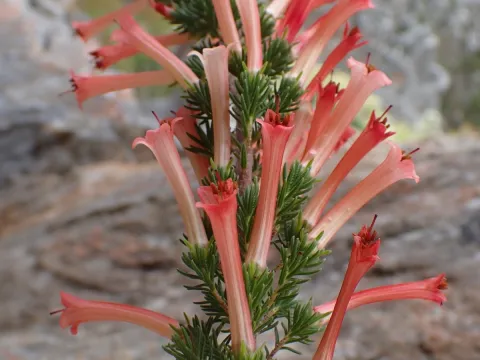
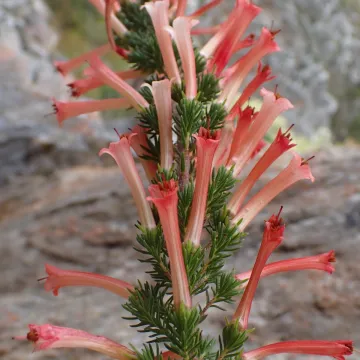
Erica curviflora is a perennial evergreen shrub belonging to the Ericaceae family. Highly valued in horticulture, this species is noted for its distinctive, curved, tubular flowers that provide a long-lasting display in gardens located in temperate or Mediterranean climate zones.
The plant originates from the Cape Floristic Region of South Africa, where it thrives in specific well-drained habitats. In terms of cultivation, it is primarily found in botanical collections and specialized gardens where growers can manage the specific environmental parameters required for the health and longevity of South African heath species.
Botanically, it presents as a small-to-medium shrub characterized by dense, needle-like foliage and inflorescences featuring arched, elongated flowers. The root system is delicate and fibrous, necessitating cautious handling during transplanting and requiring a growing medium that supports gas exchange and prevents oxygen deprivation at the root level.
Successful cultivation depends on strictly maintaining acidic soil conditions, ideally with a pH level between 4.5 and 5.5. The species requires excellent drainage, as the roots are highly susceptible to phytophthora and other fungal pathogens triggered by waterlogging. Incorporating organic acidic materials like peat moss or coniferous needles into the substrate is essential for mimicking natural nutrient and pH conditions.
- Watering: Consistent moisture without saturation using low-calcium water.
- Sunlight: Thrives best in full sun to light, partial shade.
- Feeding: Use specialized Ericaceous fertilizers during the growth phase.
- Pruning: Light shaping after flowering to encourage dense growth.
The primary use of Erica curviflora is in aesthetic landscape applications, particularly in rock gardens or as a specimen container plant. Common phytosanitary challenges include root rot caused by poor soil drainage and pest issues such as spider mites or scale insects. Effective management relies on proactive observation and maintaining optimal cultural conditions rather than excessive pesticide intervention.
Photo gallery