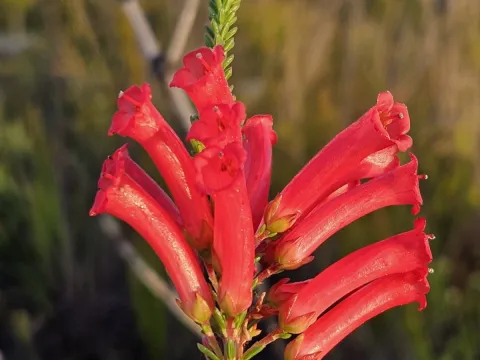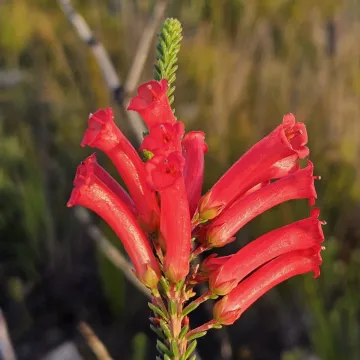

Royal heath
Erica regia
Description
Royal heath (Erica regia) is an evergreen perennial shrub belonging to the Ericaceae family. In the horticultural sector, this species is recognized for its unique aesthetic value, requiring specialized environmental controls to thrive outside its native habitat.
The plant originates from the Cape region of South Africa. Given its native distribution, it is highly sensitive to frost and extreme cold, making it suitable for protected environments or greenhouse production in most temperate zones where it serves as a high-value ornamental crop.
Botanically, Erica regia is characterized by rigid stems and needle-like leaves, producing distinct tubular flowers. Its root system is delicate and fibrous, necessitating a specific growing medium that mimics its natural acidic, well-drained soil environment to prevent root distress.
Cultivation practices focus heavily on substrate management, where the pH must remain strictly acidic. The crop requires consistent moisture levels, high light intensity, and protection from heavy wind. Proper pruning is essential after the flowering cycle to maintain the plant's structure and promote future vigor.
- Requires well-drained acidic soil (peat-based mixes).
- High demand for natural light and air circulation.
- Susceptible to root rot if overwatered.
- Vulnerable to spider mites under dry indoor conditions.
The commercial use of this plant is primarily for the ornamental trade. Disease management focuses on preventing fungal pathogens that affect the roots, while pest management involves monitoring for mites, ensuring the health of the plants throughout their growth cycle.
Photo gallery