Erica ventricosa
Erica ventricosa
Description
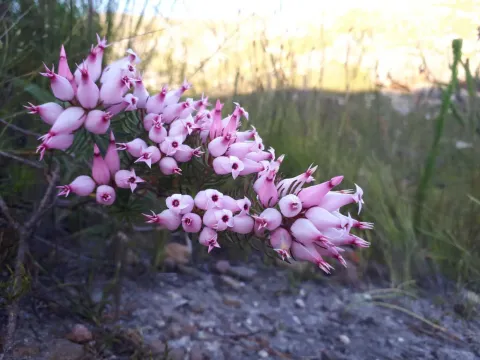
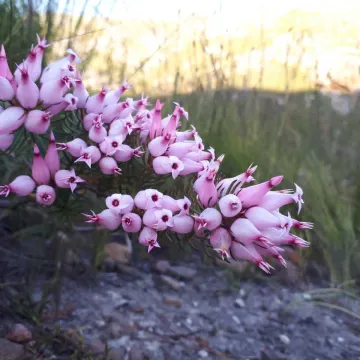
Erica ventricosa is a beautiful evergreen shrub belonging to the Ericaceae family. Known commonly as the porcelain heath or simply Erica, this species is highly regarded for its unique, waxy, bell-shaped flowers that appear in clusters. It is widely cultivated as an ornamental plant, particularly suitable for pot culture in greenhouses and conservatories.
The plant originates from the Western Cape province of South Africa. In its native habitat, it grows in rocky, well-drained acidic soils. Because of its specific environmental requirements, it is rarely grown as an outdoor plant in regions with cold winters, making it a specialized crop for controlled environments such as glasshouses where humidity and temperature can be regulated.
Botanically, Erica ventricosa is a small, bushy shrub that can reach heights of up to 60–80 cm. Its foliage is dense and needle-like, providing a perfect backdrop for the clusters of inflated, tubular flowers. The colors range from white and pale pink to deep, vibrant fuchsia, offering a long-lasting bloom period that is highly valued in the commercial floriculture sector.
Successful cultivation requires meticulous attention to the growth medium. Growers must provide a strongly acidic substrate (pH 4.5–5.5) with excellent drainage properties. Irrigation must be managed carefully; the plant demands consistent moisture but suffers significantly from waterlogging, which often leads to root rot. High light intensity is essential for maintaining compact growth and flower production.
In terms of commercial utility, Erica ventricosa is grown for the high-end nursery trade. It is a preferred choice for floral displays and ornamental pot plant sales. Maintenance of plant health is paramount, as the species is susceptible to various physiological and biological stresses. Key challenges for producers include:
- Root rot caused by Phytophthora species due to poor drainage.
- Spider mites and mealybugs, which thrive in protected cultivation environments.
- Nutrient deficiencies, specifically iron chlorosis, triggered by incorrect substrate pH.
Photo gallery