Spreading fleabane
Erigeron divaricatus
Description
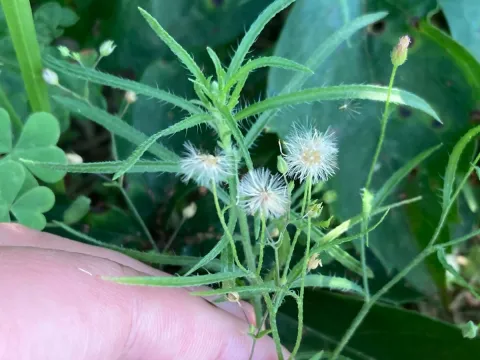
Spreading fleabane (Erigeron divaricatus) is a herbaceous plant belonging to the Asteraceae family. Within agricultural systems, it is often classified as a weed species that can thrive in disturbed soil and anthropogenic environments, potentially impacting crop yields if not properly managed.
The plant is native to North America. Its range has expanded significantly due to human activity, and it is now found in various agricultural and non-agricultural settings across temperate regions, where it colonizes field margins and cultivated land with ease.
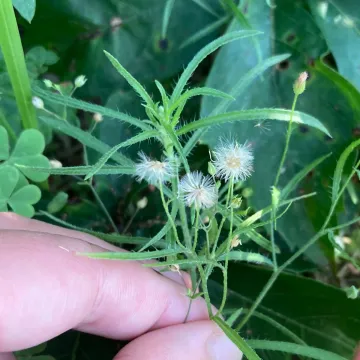
Botanically, this species is defined by its characteristic divaricating (spreading) branches, which give the plant its distinct structural appearance. The leaves are typically narrow, and the plant produces numerous small flower heads that develop into seeds, which are highly efficient at dispersing via wind currents.
Environmental requirements for this species are relatively flexible, allowing it to grow in diverse soil types ranging from loams to gravelly substrates. It favors sunny locations and can withstand periods of dryness, making it a resilient plant that requires strategic agricultural interventions for control.
In terms of management, the primary goal is to limit the spread of seeds. This is achieved through a combination of crop rotation, timely mechanical cultivation, and the application of herbicides when necessary. While it lacks significant economic value, understanding its life cycle is essential for maintaining field productivity.
- High seed dispersal efficiency
- Adapted to disturbed soils
- Sun-loving physiology
- Member of the Asteraceae family
- Resilient against dry conditions
Photo gallery