Description
Sumatran fleabane (Erigeron sumatrensis) is a herbaceous annual or biennial plant belonging to the Asteraceae family. While it is often studied in the context of botanical research, in modern agriculture, it is recognized as a significant invasive weed that poses a challenge to crop yields and land productivity in various parts of the world.
Native to South America, the plant has successfully naturalized across multiple regions, including Europe, Africa, and parts of Asia and Australia. It is highly adaptable and thrives in disturbed habitats such as agricultural fields, fallow lands, and plantation corridors. Its successful invasion is primarily attributed to its rapid growth rate and ability to colonize diverse ecological niches.
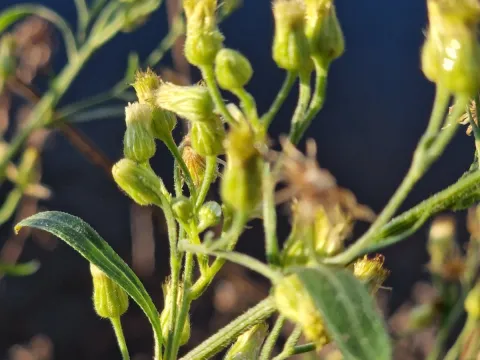
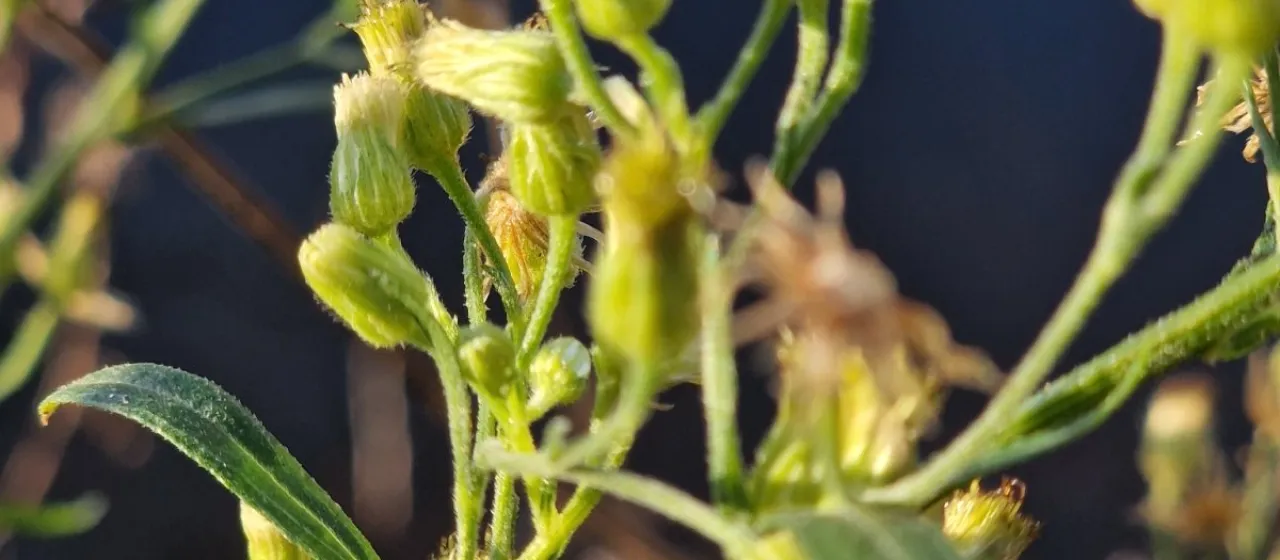
The morphology of the plant is characterized by a tall, branched stem covered with dense, rough hairs. The leaves are generally lanceolate, and the plant produces numerous small, daisy-like flower heads arranged in a panicle. A defining biological feature is its massive seed production capacity, where millions of wind-dispersed achenes can be produced by a single mature plant, ensuring wide geographical distribution.
Regarding agrotechnical requirements, Sumatran fleabane is extremely resilient. It displays a high tolerance for varying soil types and pH levels, and it excels in water-stressed environments. Management strategies primarily involve:
- Regular mechanical cultivation and tillage to disrupt root systems.
- Crop rotation to prevent long-term soil infestation.
- Integrated chemical control, rotating herbicide modes of action to prevent the development of glyphosate resistance.
Economically, the plant is viewed strictly as a harmful weed that competes directly with crops for essential resources. It is known to carry various pathogens and pests that can eventually migrate to nearby commercial crops. Effective control requires an integrated approach that focuses on prevention, such as keeping field edges clean and managing seed banks through consistent monitoring and timely intervention.
Photo gallery