Eriocephalus africanus
Eriocephalus africanus
Description
Eriocephalus africanus, commonly referred to as the Cape snowbush or wild rosemary, is a perennial evergreen shrub belonging to the Asteraceae family. This resilient species is highly valued in its native South Africa for its unique aesthetic appeal and distinct aromatic properties.
The natural range of Eriocephalus africanus covers various arid and semi-arid landscapes across the Cape region. Due to its evolutionary history, the plant has developed specific physiological mechanisms to thrive in nutrient-poor, sandy soils where water availability is frequently inconsistent throughout the year.
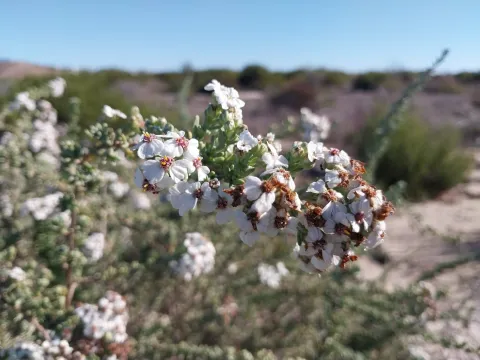
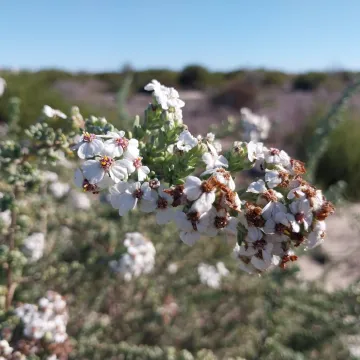
The morphology of the shrub features dense, branching stems covered in small, grey-green leaves. These leaves are covered with fine, silver hairs that reduce transpiration and provide the plant with its characteristic snowy appearance. The flowering stage is marked by the production of small daisy-like blooms, followed by white, fluffy achenes.
Cultivation of this species requires full sun exposure and excellent soil drainage. It is imperative to avoid waterlogged conditions, as the root system is highly susceptible to fungal pathogens if moisture levels remain high for extended periods. Fertilizer application should be sparing, as the plant prefers leaner soil conditions.
In practice, Eriocephalus africanus is a staple in xeriscaping and low-maintenance garden design. Beyond its ornamental use, the plant is studied for its essential oil composition, which contains sesquiterpenes. While generally robust, the plant can be affected by root rot and certain sap-sucking insects if the microclimate is too humid.
- High drought tolerance
- Silver-haired foliage
- Full sun requirement
- Excellent drainage mandatory
- Valuable in xeriscaping
Photo gallery