Prairie cupgrass
Eriochloa contracta
Description
Prairie cupgrass (Eriochloa contracta) is an annual grass species belonging to the Poaceae family. While often viewed as a competitive weed in agricultural settings, its physiological resilience makes it an interesting subject for studies on plant adaptation within North American grassland ecosystems.
Native to the central and southern regions of North America, this plant has adapted to diverse environments ranging from moist bottomlands to disturbed crop fields. Its ability to colonize open spaces quickly has made it a significant species in both natural prairies and managed agricultural lands.
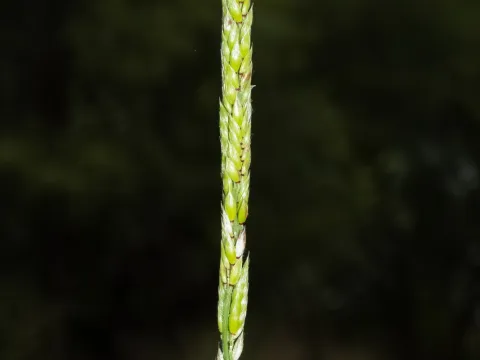
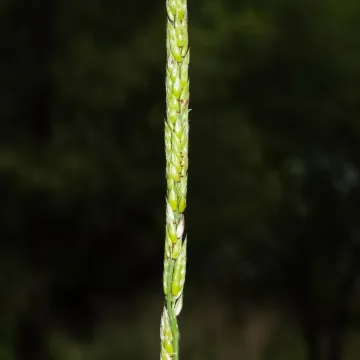
Botanically, the plant is characterized by its distinct, narrow panicle inflorescence, from which it derives its name. The stems are typically erect, reaching heights between 30 and 90 centimeters. The leaves are flat and covered in fine hairs, an adaptation that reduces water loss in high-temperature environments typical of its native range.
Regarding cultivation and environmental requirements, the plant thrives in warm-season conditions. It is highly sensitive to frost and germinates only when soil temperatures are consistently high. It favors well-drained, fertile soils but can withstand periodic inundation, making it versatile in various landscape positions.
Economically, Prairie cupgrass is rarely sown as a primary crop, though it can serve as secondary forage on rangelands. In intensive farming, management is focused on weed control, particularly in row crops like soybeans and cotton. Common pests include aphid species and fungal pathogens such as rust, which can impact foliage health in humid, stagnant air conditions.
- Exceptional heat tolerance during the peak summer months.
- Rapid life cycle facilitating quick colonization of disturbed soils.
- High competitive ability against slow-growing crop seedlings.
- Significant contribution to the soil seed bank after maturity.
Photo gallery