Mexican cupgrass
Eriochloa gracilis
Description
Mexican cupgrass (Eriochloa gracilis) is an annual grass species belonging to the Poaceae family. It is recognized for its adaptive capabilities in arid and semi-arid environments, often serving as a primary component of natural grasslands in its native range.
The native distribution of Eriochloa gracilis is primarily focused in the Southwestern United States and Northern Mexico. It is frequently found inhabiting riparian areas, ditch banks, and disturbed soils, where its robust growth habit allows it to thrive despite irregular water availability.
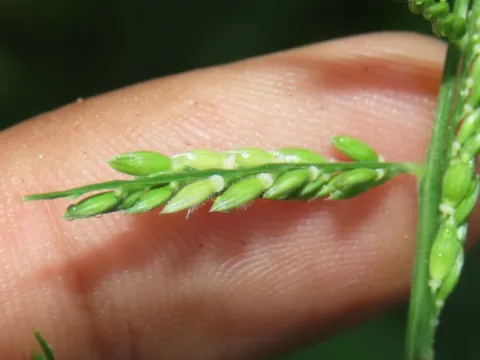
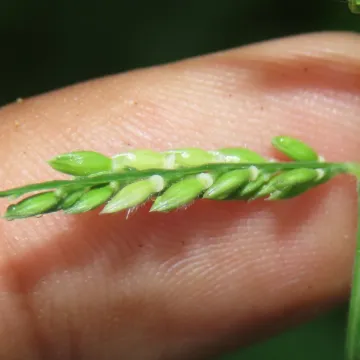
Botanically, this species features erect or geniculate-ascending culms that can reach a moderate height. Its leaves are generally linear and frequently display a degree of pubescence, which serves as a critical morphological adaptation to reduce transpiration rates in high-temperature climates. The inflorescence consists of a panicle of racemes, with spikelets protected by fine, characteristic hairs.
Agricultural requirements for this grass include well-drained soil and high levels of solar radiation. It thrives in loamy or sandy substrates and is highly efficient at managing water uptake during heatwaves. Successful establishment depends on ensuring that soil conditions are not overly compacted, as the root system prefers aeration for optimal growth.
The primary agricultural utility of Mexican cupgrass lies in its role as forage for livestock in range settings. Furthermore, researchers assess this species for soil conservation purposes, particularly in efforts to reclaim eroded rangelands or to stabilize banks in irrigation systems where more demanding crop varieties struggle to survive.
- Family: Poaceae
- Life Cycle: Annual
- Sun Requirements: Full sun
- Tolerance: Drought-tolerant
Photo gallery