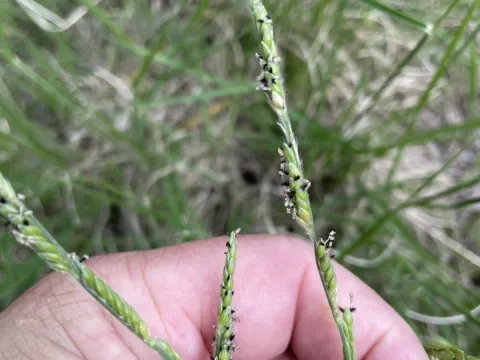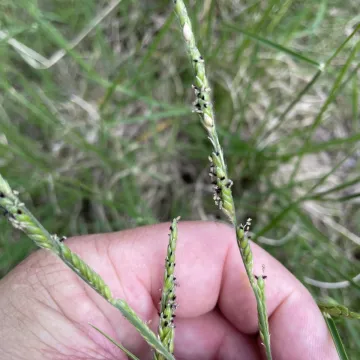
Texas woollygrass
Eriochloa sericea
Description
Texas woollygrass (Eriochloa sericea) is a perennial grass species belonging to the Poaceae family. Recognized for its agricultural potential, this native warm-season grass serves as a crucial component in range management and forage production systems across its native habitats in North America.
The origin of the species is linked to the prairies of the United States, particularly the Southern Plains. Its distribution is determined by its ability to thrive in regions with periodic summer droughts and varying moisture availability, making it a reliable resource for sustainable land management.
Botanically, it is distinguished by its dense, tufted growth habit and soft, fine hairs covering the foliage, which give it a unique silvery appearance. The root system is deep and fibrous, allowing the plant to reach subsoil moisture and survive prolonged dry spells that would inhibit other types of vegetation.
Agronomic success with Texas woollygrass depends on selecting sites with well-drained loamy or rocky soils. It performs best in open areas with full sun exposure and is highly sensitive to soil compaction and waterlogging. Proper management involves moderate grazing pressure, which prevents the depletion of root reserves and maintains high plant vigor.
Economically, the species is valued for its palatability and nutritional content, providing essential nutrients for livestock. Beyond its forage utility, it acts as a stabilizing agent for soil, preventing erosion in fragile ecosystems. It is generally resistant to common grass pests and leaf spot diseases.
- Superior drought tolerance and high heat resilience.
- Excellent grazing recovery rates during the growing season.
- Naturally resistant to typical fungal pathogens.
- Effective for soil erosion control and habitat restoration.
Photo gallery