Description
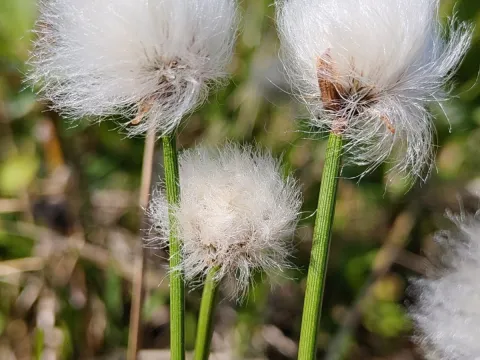
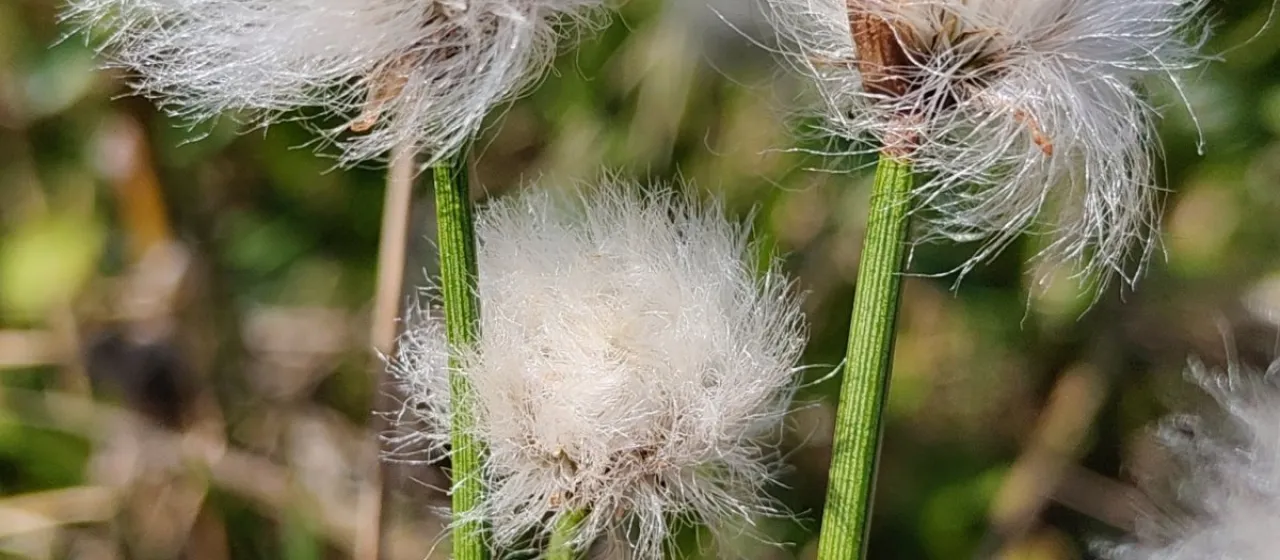
Scheuchzer's cottongrass (Eriophorum scheuchzeri) is a perennial herbaceous plant belonging to the sedge family (Cyperaceae). As an agricultural and ornamental crop, it is uniquely valued for its ability to thrive in extremely wet, cold environments, providing a distinctive aesthetic appeal with its characteristic snowy-white, fluffy fruiting heads that appear during the maturation of the perianth bristles.
The plant originates from arctic, subarctic, and alpine regions of the Northern Hemisphere. Its native range spans across northern Eurasia and North America, where it grows in peat bogs, tundra, and the margins of alpine lakes. This species is remarkably well-adapted to high-latitude and high-altitude climates, demonstrating significant resilience to freezing temperatures and acidic, waterlogged substrates.
Botanically, it is a rhizomatous perennial that forms loose, spreading mats. The culms are slender, erect, and cylindrical, typically reaching a height of 10 to 40 cm. The leaves are narrow and linear, primarily growing from the base. The most distinguishing feature is its solitary spikelet, which, as the plant ripens, expands into a spherical mass of silky, white hairs that serve as a striking visual element in wetland landscapes.
Agronomic requirements are centered on maintaining high moisture levels, which are critical for the survival of Eriophorum scheuchzeri. To successfully cultivate this plant, it should be planted in acidic, organic-rich soil, such as peat or moss-based substrates. It thrives best in full sun or light shade and requires consistent saturation of the root zone, making it unsuitable for standard garden beds but excellent for water gardens or wet meadow restorations.
Regarding its utility, the plant is primarily used for ecological landscaping and the rehabilitation of degraded wetlands. It is occasionally explored as part of natural grazing systems in sub-arctic regions for reindeer. The species is generally robust and rarely suffers from major pests or diseases, though in stagnant, highly polluted water, it may become susceptible to root rot and other fungal pathogens common to sedge species.
Photo gallery