Description
Erophila majuscula is an annual herbaceous plant belonging to the Brassicaceae family. Commonly recognized as a spring ephemeral, this species is frequently encountered in agricultural fields, pastures, and disturbed lands, where it completes its reproductive cycle rapidly during the early spring season.
Native to temperate regions of Europe and Western Asia, the plant is widely distributed across various habitats. It thrives in open, sunny locations and is often observed in winter crop rotations, where it utilizes available moisture before the onset of summer drought periods. Its presence in fields is highly dependent on light and soil temperature.
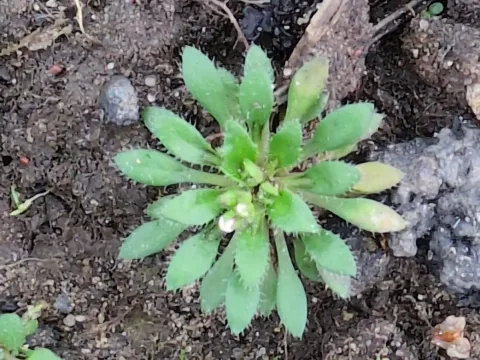
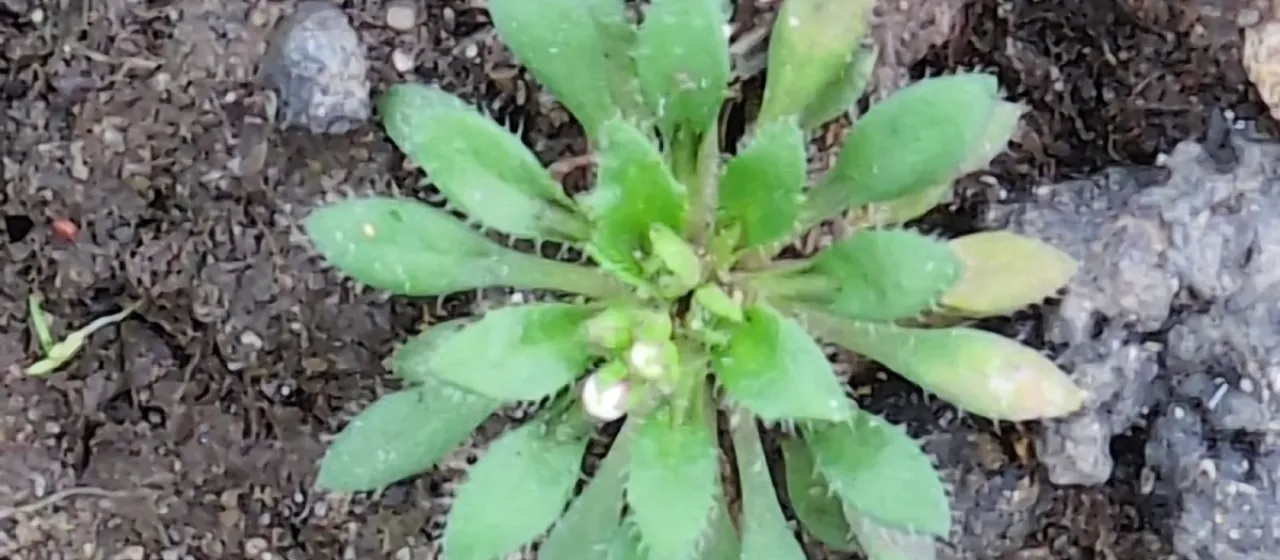
The morphology of Erophila majuscula is characterized by a basal rosette of leaves and slender stems. The flowers are distinctive, featuring four white, deeply bifid petals that give them a split appearance. Following pollination, the plant develops small, elongated siliques filled with numerous tiny seeds that facilitate rapid colonization of new areas.
Agronomic requirements for this species include well-drained, nutrient-poor to moderately fertile soils, often showing a preference for sandy textures. Effective management in agriculture relies on integrated weed control practices, such as mechanical cultivation or harrowing in early spring, which target the plant before it sets viable seeds.
While not a major commercial crop, Erophila majuscula is studied for its ecological role as an indicator of early-season soil conditions. Like many members of the Brassicaceae family, it can be susceptible to common pathogens and pests:
- Crucifer flea beetles (Phyllotreta spp.);
- Powdery mildew fungi;
- White rust infections;
- Various aphid species.
Photo gallery