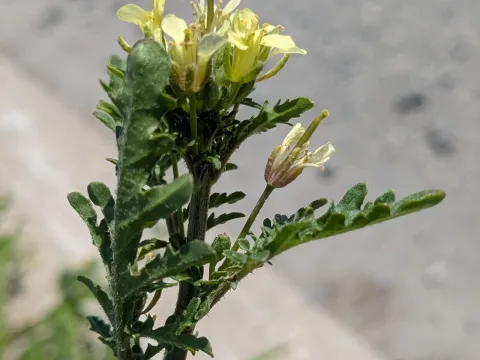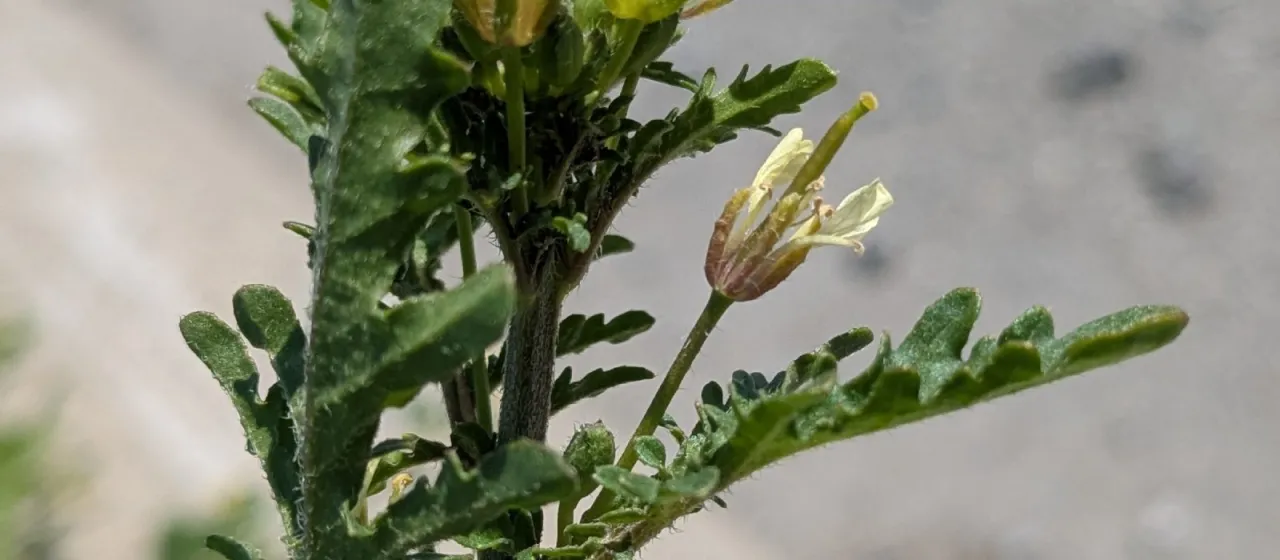
Description
Dog mustard (Erucastrum gallicum) is an annual or biennial herbaceous plant belonging to the Brassicaceae family. While frequently classified as an agricultural weed, it is a resilient species with specific biological traits that allow it to thrive in diverse environments. Understanding its lifecycle is essential for farmers managing fields prone to its infestation.
Originating from Europe, this plant has successfully colonized vast regions across North America and beyond. It is typically found in disturbed soils, such as roadsides, construction sites, and agricultural fields. Its ability to tolerate low soil fertility and survive in various climatic conditions has made it a widespread subject of study in weed science and plant ecology.
The morphology of the plant is characterized by a branched, erect stem reaching heights between 20 and 60 cm. Its foliage consists of deeply pinnatifid leaves, while the flowers are small, yellow, and arranged in terminal racemes. The plant reproduces via seeds contained within elongated pods. A single plant can produce a vast number of seeds, ensuring its persistence in the seed bank for several seasons.
Regarding agrotechnology, Dog mustard thrives in open, sunny locations with well-drained, alkaline to neutral soil. It is highly competitive in cereal crops. Effective management involves mechanical cultivation during the seedling stage and crop rotation to disrupt the lifecycle. Chemical control using selective herbicides is also a standard approach in commercial farming when the density of the plant exceeds economic thresholds.
From an agricultural management perspective, the plant has limited but notable uses:
- It serves as a valuable nectar source for pollinators, particularly honeybees.
- It can be managed as a temporary green cover to prevent soil erosion in specific contexts.
- The plant can act as an alternate host for pests and diseases, such as clubroot or flea beetles, which can affect commercial Brassica crops.
Photo gallery