Barrelier's eryngo
Eryngium barrelieri
Description
Barrelier's eryngo (lat. Eryngium barrelieri) is a distinctive perennial herb belonging to the Apiaceae family. This species is recognized for its unique structural adaptation to Mediterranean climates and its resilience in challenging environmental conditions, making it an interesting subject for specialized botanical cultivation.
The native range of this plant is confined primarily to the western Mediterranean, including areas in Spain, Portugal, and Morocco. It naturally thrives in seasonal wetlands and degraded meadows, showcasing a specialized ability to survive in environments that fluctuate between waterlogged conditions and extreme summer drought.
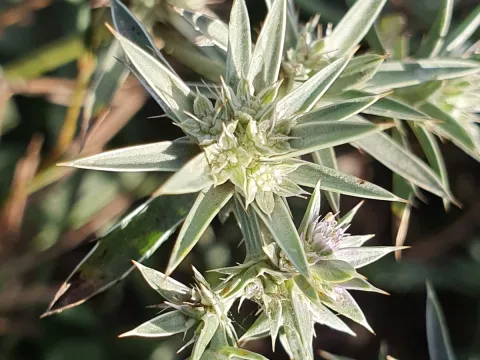
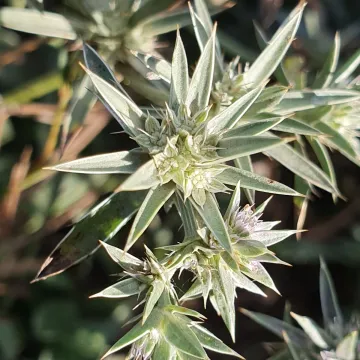
Botanically, the plant is characterized by its rigid, deeply divided foliage and distinctively spiny bracts surrounding compact, metallic-blue flower heads. Its root system is deep and fleshy, functioning as an energy storage organ that allows the plant to persist through periods of high environmental stress and minimal nutrient availability.
Agricultural success depends on providing well-drained, nutrient-poor soil that mimics its native habitat. The plant requires full solar exposure to develop its characteristic blue pigmentation. Proper management involves avoiding excessive irrigation during the dormant winter months, as stagnant water is the primary cause of root-related failures in this species.
The primary economic use of Barrelier's eryngo lies in ornamental horticulture, where it is valued for xeriscaping and sustainable garden design. In addition to its aesthetic function, the plant serves as a vital resource for local pollinator populations. While it is generally robust, growers should monitor for aphids and powdery mildew in poorly ventilated environments.
- Exceptional drought tolerance once established
- Preference for well-drained, gritty substrates
- Excellent longevity as a cut flower for dried arrangements
- Low maintenance requirements once fully grown
Photo gallery