Description
Eryngium divaricatum is a herbaceous perennial plant belonging to the family Apiaceae. Recognized for its structural elegance and survival mechanisms, this species represents a fascinating subject for agricultural studies focusing on drought-tolerant ornamental plants and potential medicinal applications in arid or semi-arid climates.
Originating from South American ecosystems, specifically within parts of Argentina and Uruguay, the species has adapted to open grasslands and savannah-like environments. Its distribution is closely linked to its ability to thrive in poor soils and regions with high levels of direct solar radiation, making it a reliable choice for low-maintenance agricultural plots.
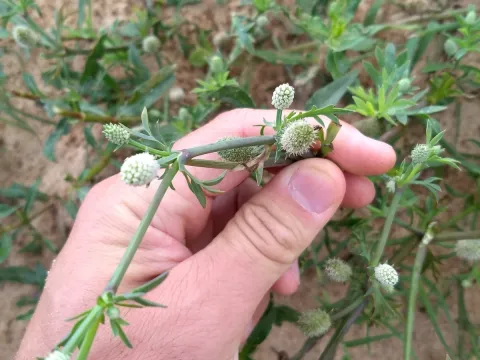
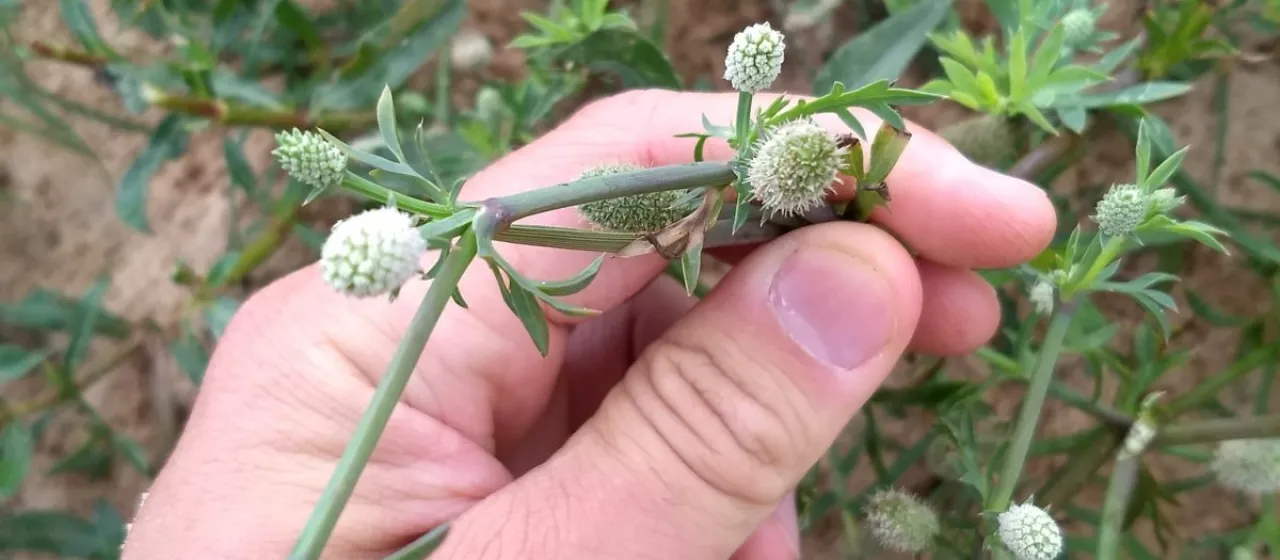
Botanically, the plant is characterized by a sprawling, branched habit and stiff, serrated basal leaves. The most striking features are the capitate inflorescences, which are surrounded by spiny, steel-blue or greenish bracts. The root system is deep and woody, allowing the plant to sustain metabolic activity even when surface soil moisture is severely depleted.
Successful cultivation of Eryngium divaricatum depends on strict adherence to drainage requirements. To maximize vigor and appearance, cultivators should observe the following:
- Select sites with full sun exposure and unobstructed airflow.
- Ensure the soil is sandy or gravelly with a neutral to slightly alkaline pH.
- Avoid heavy irrigation; the plant is highly susceptible to root rot in waterlogged conditions.
- Apply minimal fertilization, as high nutrient levels can cause weak, spindly stem growth.
In terms of хозяйственное (economic) utility, Eryngium divaricatum is widely used in xeriscaping and as a filler in dried flower arrangements. While generally robust, the crop can be prone to fungal leaf spots if humidity remains high for extended periods. Regular monitoring and the removal of spent flower heads help to maintain plant health and prevent the spread of disease, ensuring long-term yield in ornamental production.
Photo gallery