Description
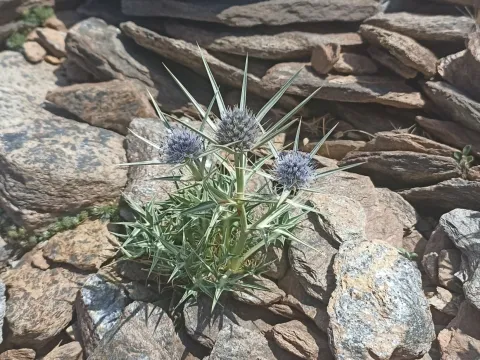
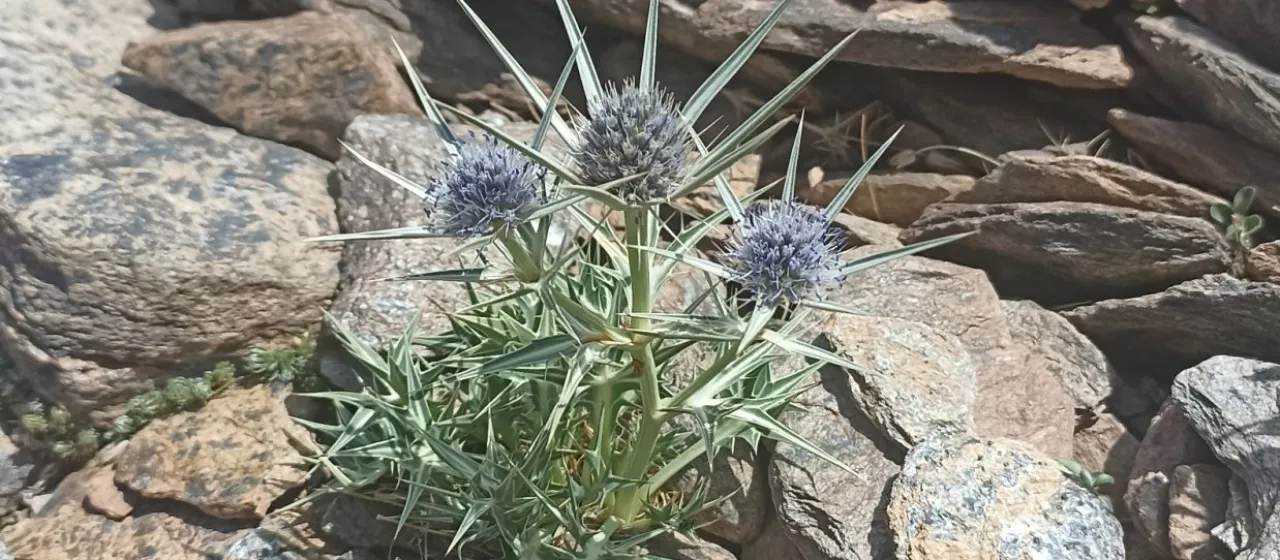
Ice eryngo (Eryngium glaciale) is a perennial herbaceous plant belonging to the Apiaceae family. This species is highly specialized, having evolved to thrive in high-altitude environments. It is characterized by a low-growing, cushion-forming habit that allows it to withstand extreme winds and harsh climatic conditions typical of alpine zones.
The origin of this species is traced to the mountainous regions of Spain, particularly the Sierra Nevada. As an endemic plant of these rocky highlands, it has adapted to live in nutrient-poor substrates and crevices, where it competes successfully due to its deep taproot and xerophytic structural adaptations.
Botany-wise, the plant features rigid, leathery leaves with spiny margins, which serve as a primary defense mechanism against grazing. The flower heads are compact, typical of the genus, and exhibit a distinct steel-blue metallic luster that appears during the peak of the blooming season, providing high visual interest in rock gardens.
Cultivation requirements for Ice eryngo focus heavily on soil drainage. It requires a lean, sandy, or stony substrate and full sun exposure to maintain its compact, cushion-like shape. In a garden setting, it is essential to ensure that the crown of the plant stays dry, especially during winter months, to prevent physiological stress or rot.
In terms of agricultural and horticultural use, this species is highly valued for xeriscaping and alpine garden displays. It is remarkably resistant to typical pests and diseases that plague herbaceous perennials. However, growers should be vigilant against root rot caused by poor soil structure or overwatering, which remain the primary threats to the health of the plant.
Photo gallery