Description
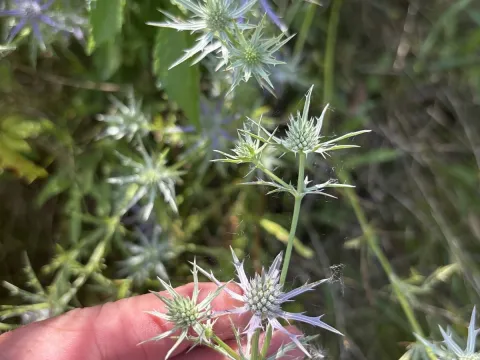
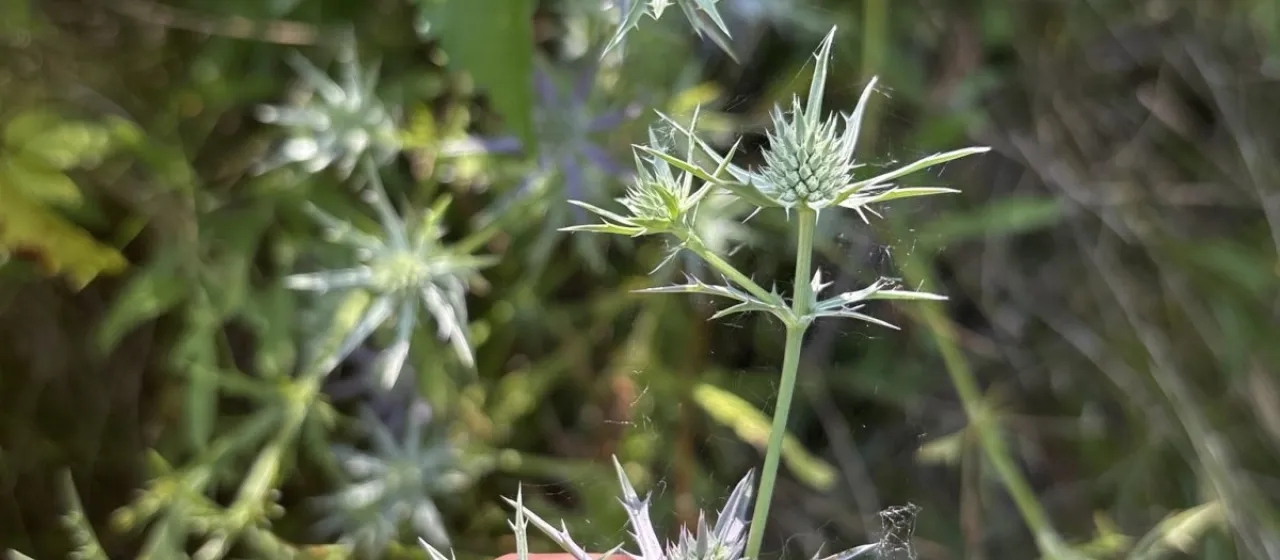
Hooker's eryngo (lat. Eryngium hookeri) is an herbaceous flowering plant belonging to the Apiaceae family. This species is highly regarded for its unique sculptural form and striking blue-tinged inflorescences, which distinguish it from other garden perennials.
The plant originates from North America, where it typically inhabits wetlands, low-lying prairies, and areas with periodic soil saturation. Its historical range is centered in the southern United States, where the climate conditions allow for the vigorous growth of this hardy species.
Botanically, Hooker's eryngo is defined by its prickly, serrated leaves and globular flower heads surrounded by stiff bracts. These features are evolutionary adaptations that protect the plant from herbivory and minimize water loss through transpiration, allowing it to remain attractive even during dry summer periods.
For optimal growth, the species requires full sun exposure and well-drained, fertile soils. While it can tolerate various soil textures, the key to successful cultivation is providing enough space for root development and preventing waterlogging, which can lead to crown rot, especially in cooler climates.
Economically, this plant is primarily utilized in the ornamental horticulture and dried flower industry. Its rigid structure and ability to retain its color when dried make it a staple for floral decorators. In terms of pest management, it is relatively resistant to major pathogens, though proper spacing is essential to ensure good air circulation and prevent fungal infections.
- High resistance to extreme solar radiation.
- Excellent performance as a cut flower for dried bouquets.
- Low maintenance requirements once established.
Photo gallery