Description
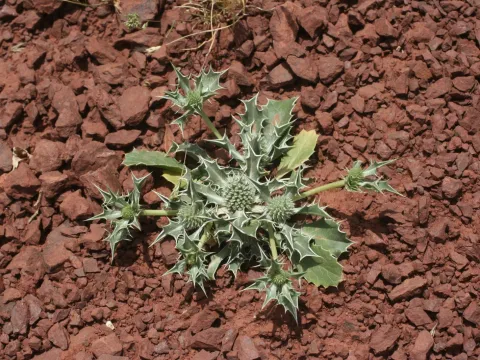
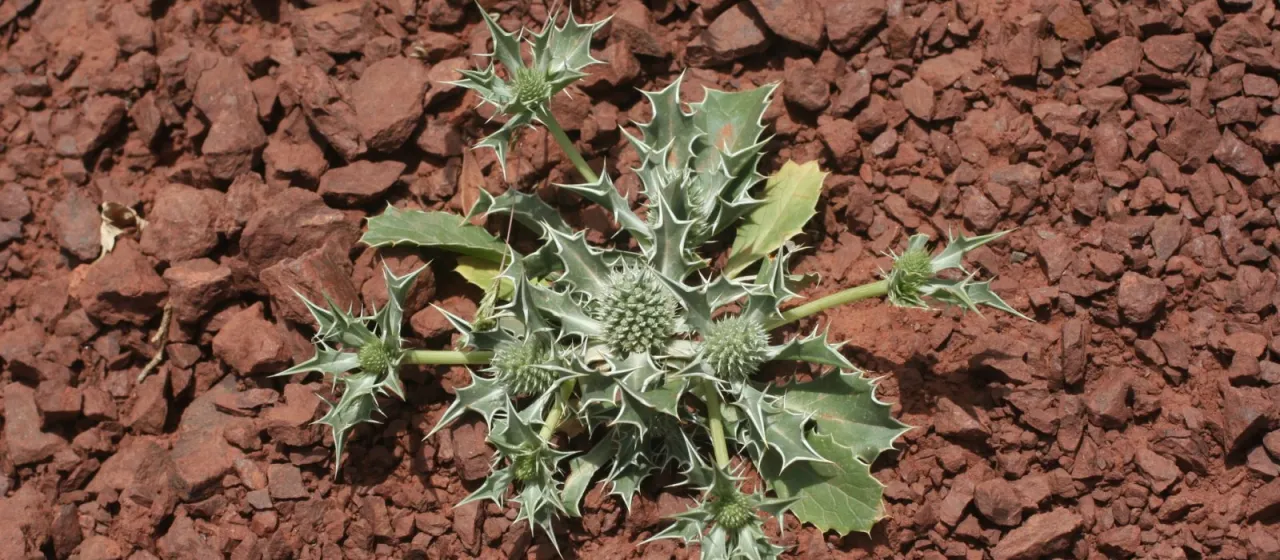
The holly-leaved sea holly (Eryngium ilicifolium) is a perennial herbaceous plant belonging to the Apiaceae family. It is distinguished by its leathery, spiny-edged foliage that bears a striking resemblance to holly leaves. This species is recognized for its architectural structure and distinctive blue-hued flower heads, making it a unique addition to specialized horticultural collections.
Originating from the Mediterranean basin, this plant has adapted to the challenging environmental conditions of its native range. It naturally thrives in coastal areas and dry, sunny habitats in parts of Southern Europe and Northern Africa. This evolutionary background makes it a highly resilient choice for xeriscaping or gardens with water-conscious management.
Botanically, it features a rosette of basal leaves and stiff, branched flowering stems. The inflorescences are dense, cone-like heads surrounded by prickly bracts. As the plant matures, the metallic blue coloration of the bracts intensifies, providing a long-lasting visual interest throughout the summer months.
Cultivation success depends on providing full sun exposure and well-draining soil. This plant is particularly sensitive to soil moisture levels; it demands gritty or sandy substrates that prevent waterlogging. It is remarkably drought-tolerant once established, requiring minimal fertilization and irrigation compared to traditional agricultural crops.
The primary use of Eryngium ilicifolium is in professional landscape design and floral industry applications, where its durability as a dried flower is highly prized. While generally robust, growers should monitor for common pests like aphids and ensure proper spacing to prevent fungal issues caused by excessive humidity or poor ventilation around the foliage.
Photo gallery