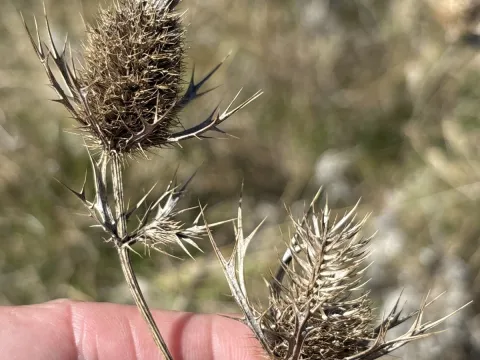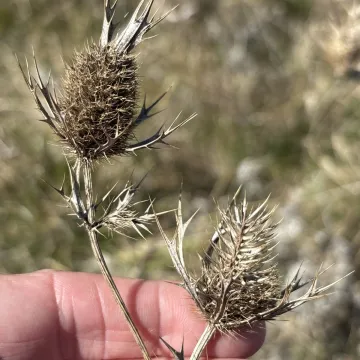
Leavenworth's eryngo
Eryngium leavenworthii
Description
Leavenworth's eryngo (Eryngium leavenworthii) is a distinctive herbaceous plant belonging to the Apiaceae family. It is widely recognized for its intense purple-violet bracts and architectural, thistle-like appearance, which makes it a standout choice for xeriscaping and ornamental horticulture.
Native to the central United States, including states like Oklahoma and Texas, this species is naturally adapted to prairie environments. It thrives in regions characterized by hot summers and periodic droughts, demonstrating remarkable resilience and minimal water requirements once established in the field.
The plant features a sturdy, branched stem that can reach up to one meter in height. Its foliage is sharply serrated, while the central flower heads are protected by rigid, spiky bracts. This unique morphology is not only aesthetically pleasing but also functional, protecting the plant from herbivores in its natural habitat.
When cultivating Eryngium leavenworthii, agronomic success relies on providing full sun exposure and poor, well-draining soil. It is imperative to avoid heavy clay or nutrient-rich substrates, which may lead to excessive foliage growth and susceptibility to fungal pathogens. The plant prefers sandy or rocky soils that mimic its natural prairie environment.
In terms of хозяйственное usage, this species is highly valued in the dried flower industry. Its ability to maintain structural integrity and color after drying makes it a staple for floral arrangements. It also serves as a critical late-season nectar source for pollinators, supporting biodiversity in the agricultural landscape.
- Requires full sun and dry conditions
- Excellent for dried floral compositions
- Low maintenance after establishment
- Attractive to native bees and butterflies
Disease management is primarily focused on preventing root rot, which occurs in waterlogged soils. While relatively pest-resistant, growers should be vigilant against aphids that may colonize the developing flower heads. Proper spacing to ensure air circulation is the best preventive strategy against both pests and fungal issues.
Photo gallery