Description
Erythrina americana is a prominent deciduous tree belonging to the Fabaceae family. Known widely as a type of coral tree, it is highly regarded in agricultural systems for its nitrogen-fixing capabilities and its role in maintaining soil health. This perennial plant typically reaches a moderate height, making it suitable for various integrated farming landscapes.
Originating from Mexico, the species is widely distributed throughout Central America. It thrives in tropical and subtropical zones where it adapts to different soil types, ranging from sandy loams to heavier clay-based soils, provided there is adequate drainage. Its natural habitat includes both primary forests and open rural areas where it serves as a key biodiversity element.
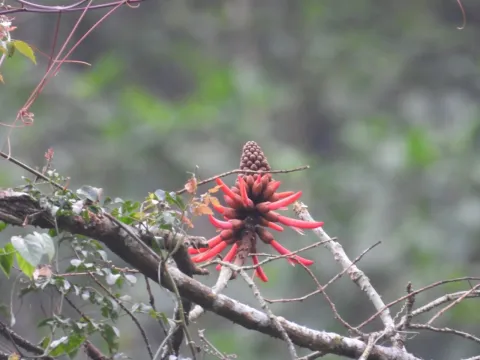
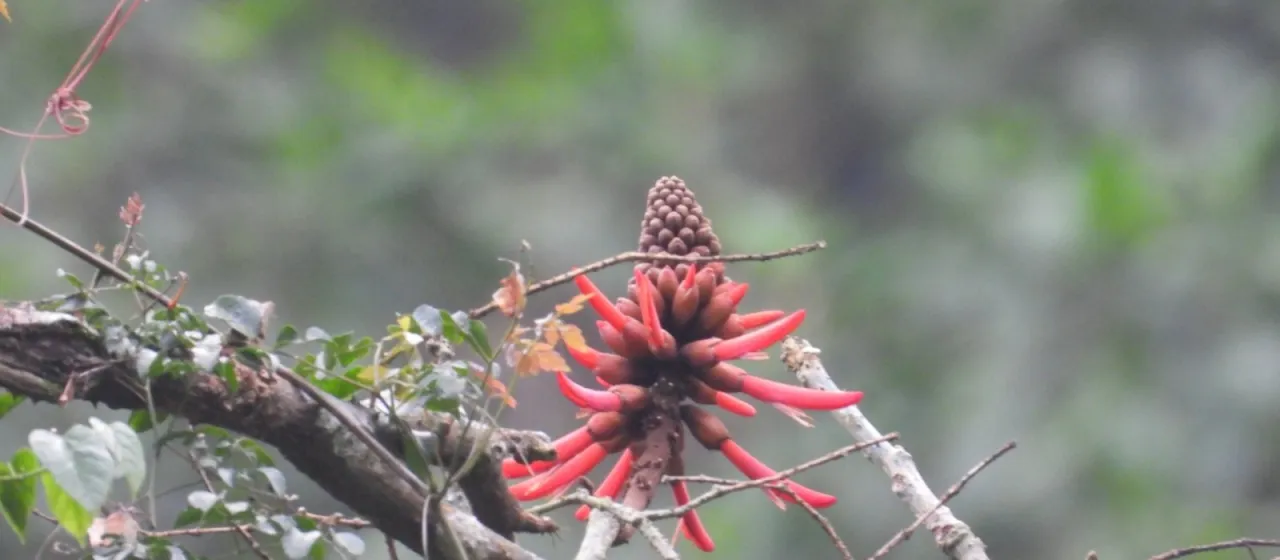
Botanically, it is characterized by its trifoliate leaves and striking, vivid red flowers that emerge before the foliage. The tree produces bean-like pods containing hard-coated seeds. Its root system is deep and expansive, which helps in preventing soil erosion on sloping terrains, a critical feature for sustainable land management in tropical regions.
In terms of agronomy, Erythrina americana requires full sun exposure to maintain its vigorous growth and abundant flowering. Maintenance practices involve consistent pruning, which encourages a denser branching pattern and aids in the harvest of leafy biomass for green manure. Propagation is efficiently achieved through stem cuttings, which is the preferred method for commercial nurseries.
The tree serves multiple agricultural purposes, including acting as a living fence, windbreak, and a source of organic matter for soil enrichment. While it is useful in many ways, growers should be aware that the plant contains specific toxins, making it unsuitable for direct forage consumption by livestock. Disease management focuses primarily on monitoring for aphid infestations and root rot caused by poor soil ventilation.
- Effective nitrogen-fixing properties.
- Ideal for living fences and windbreaks.
- Attractive flowering for ornamental use.
- Requires minimal irrigation once established.
- Propagation mainly through vegetative cuttings.
Photo gallery