Description
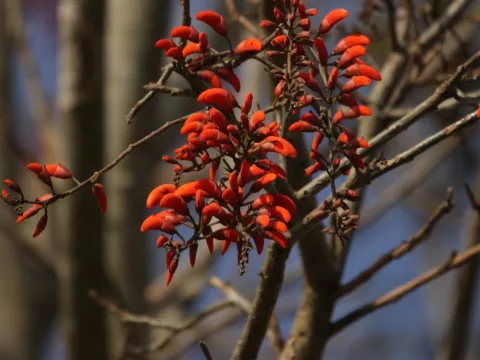
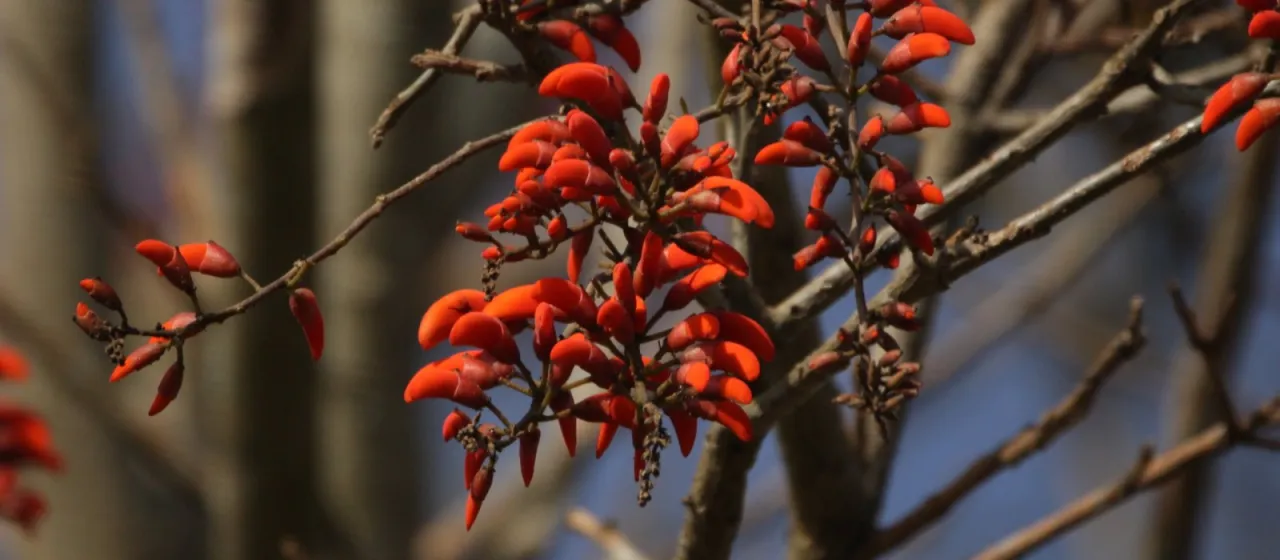
The Brazilian coral tree (Erythrina falcata) is a deciduous tree belonging to the Fabaceae (legume) family. Renowned for its rapid growth and impressive display of curved, scarlet flowers, this species is a staple in many tropical landscapes. It is recognized globally for its ecological contribution as a nitrogen-fixing plant that enriches the soil structure.
Originating from South America, specifically in countries like Brazil, Argentina, and Paraguay, the tree is well-adapted to varied tropical and subtropical environments. It is frequently found in gallery forests and savanna regions, showcasing its versatility. Its distribution in agricultural and urban settings has spread due to its ornamental value and ease of propagation.
Botanically, Erythrina falcata is characterized by its ternate leaves and iconic, sickle-shaped inflorescences that attract various pollinators, especially hummingbirds. The bark is typically coarse and armed with spines, serving as a defense mechanism. In terms of size, it can grow into a medium-to-large tree, making it suitable for large garden spaces and agroforestry projects.
To cultivate this species successfully, growers should provide well-drained, nutrient-rich soil and full sun exposure. While the tree can withstand short dry spells once established, consistent moisture is necessary for optimal development. It is crucial to avoid waterlogged soils, as this can trigger root rot, a significant risk for the genus Erythrina in improper drainage conditions.
Economically, the species is utilized for landscape restoration and decorative planting. Its wood is sometimes used for lightweight carpentry, though its primary agricultural value remains in soil stabilization and as a shade tree for coffee or cacao plantations. Managing pests like spider mites and aphids remains standard practice, and proper spacing is required to maintain airflow and prevent fungal infections.
Photo gallery