Description
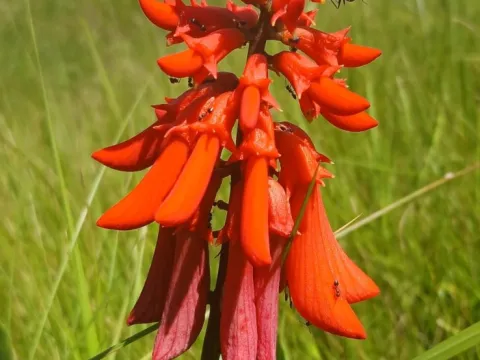
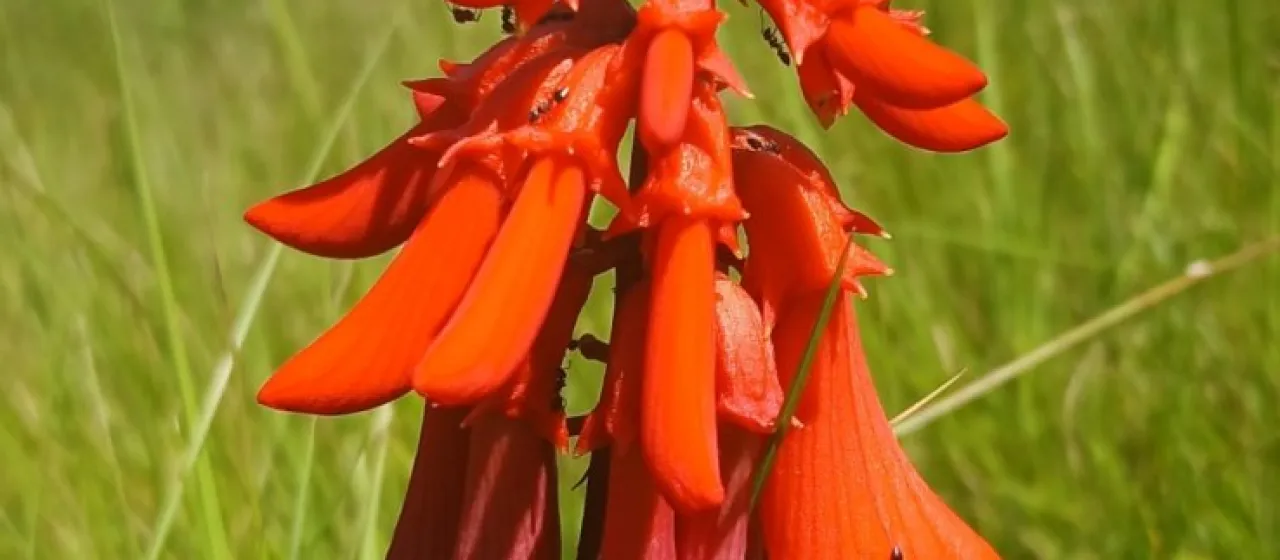
The Natal coral tree (Erythrina humeana) is a perennial woody plant belonging to the Fabaceae family. It is widely recognized for its vibrant, scarlet flower spikes that bloom in a dramatic fashion, often before the foliage fully develops. This species serves as a prominent ornamental element in warmer climates worldwide.
Native to South Africa, the plant thrives in savanna environments and forest margins. As a member of the legume family, it contributes to nitrogen fixation in the soil, which helps maintain soil health in its natural habitat. It is a hardy, drought-tolerant species once established, making it a popular choice for xeriscaping.
Botanically, the plant is characterized by its trifoliate leaves, spines along the branches, and tubular, nectar-rich flowers. These flowers are highly attractive to birds, particularly sunbirds, which act as primary pollinators. The seed pods are long and slender, typically drying and splitting to disperse seeds after the reproductive cycle is complete.
Agronomic requirements for Erythrina humeana center on excellent soil drainage and a full sun exposure. While the plant can handle periods of drought, supplemental irrigation is recommended during the flowering phase to promote more vigorous growth. In cooler regions, it must be grown in containers to allow for winter protection, as frost can cause significant damage to the plant structure.
Maintenance and pest management are crucial for preserving the plant's health and aesthetic value. Common concerns include:
- Root rot, usually caused by poor drainage or overwatering.
- Pest infestations such as aphids, scale insects, and spider mites.
- Fungal leaf spots during periods of excessive humidity or poor air circulation.
Photo gallery