Mexican coral tree
Erythrina mexicana
Description
Mexican coral tree (Erythrina mexicana) is a perennial woody plant belonging to the Fabaceae family, subfamily Faboideae. This species is widely recognized for its vibrant floral displays and its utility in tropical agricultural systems. It stands out as a robust plant capable of thriving in varied environmental conditions within its native range.
The origin of this species is traced to the tropical regions of Mexico and parts of Central America. It naturally inhabits deciduous forests and mountainous regions, where it has adapted to specific seasonal variations. Due to its hardiness and versatility, the cultivation of this species has expanded into various tropical landscapes worldwide, where it serves both decorative and functional purposes.
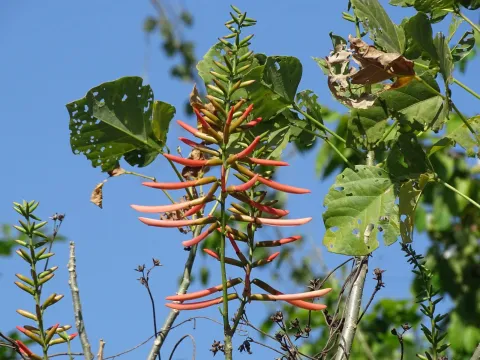
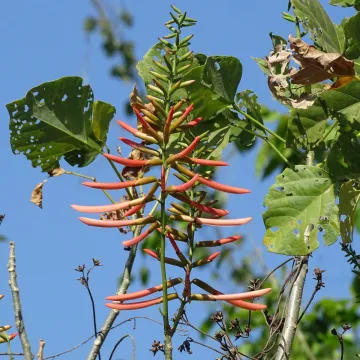
Botanically, it is characterized by thorny branches and striking, coral-red inflorescences that appear before or during the leafing phase. The leaves are trifoliate, typical of the bean family. A key biological attribute is its deep root system, which engages in symbiotic relationships with rhizobia bacteria, facilitating the enrichment of soil nitrogen content in its immediate vicinity.
Regarding cultivation requirements, Erythrina mexicana prefers full sun exposure and well-draining soils. It is relatively drought-tolerant once established but requires consistent irrigation during the initial stages of growth. Proper soil management is essential to avoid waterlogging, as the species is sensitive to root rot if stagnant water conditions persist for extended periods in the root zone.
Economically, the tree is highly valued for agroforestry, often utilized as a living fence or as a shade provider for sensitive crops like coffee or cocoa. In terms of plant health, management strategies focus on monitoring for leaf-feeding insects and preventing fungal infections of the bark. Regular pruning is recommended to maintain the desired canopy shape and encourage vigorous new growth.
- Excellent choice for soil nitrogen enrichment.
- Suitable for creating natural windbreaks and living fences.
- High adaptability to poor soil conditions.
- Significant ornamental value due to intense red flowers.
Photo gallery