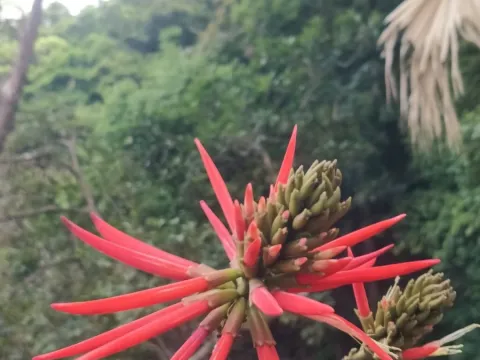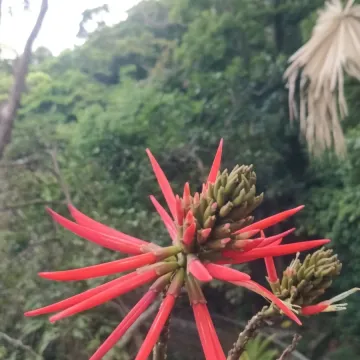
Erythrina speciosa
Erythrina speciosa
Description
Erythrina speciosa, belonging to the Fabaceae family, is a perennial flowering tree known for its striking architectural form and vibrant blooms. It is widely recognized in horticultural circles as a specimen tree that adds significant visual value to tropical and subtropical landscapes.
Native to Brazil, this species thrives in humid tropical environments. Its range of cultivation has expanded to various regions across the globe with similar frost-free climates. It is highly dependent on warmth and sunlight for optimal development and flower production throughout its life cycle.
Botanically, the tree is characterized by a prickly trunk and branches, serving as a deterrent against herbivores. Its foliage consists of large, trifoliate leaves, and its inflorescences, which resemble coral-like structures, are adapted for bird pollination. The root system is deep, reflecting its adaptation to survive in competitive, natural habitats.
For successful cultivation, the plant requires well-drained, fertile soil with a slightly acidic to neutral pH. Agricultural management involves regular irrigation during the growth phase, while avoiding soil saturation, which may lead to root rot. Fertilizer application is recommended during the spring to promote vigorous branch growth and healthy flower bud development.
In terms of хозяйственное (economic) utility, Erythrina speciosa is predominantly used for urban beautification and reforestation initiatives. As a legume, it contributes to soil fertility by fixing nitrogen via symbiotic bacteria in its root nodules. While highly ornamental, growers must remain vigilant against pests such as aphids, mites, and scale insects, which can impede the plant’s vigor.
- Excellent tolerance to pruning for maintenance and shape control.
- High nitrogen-fixing potential benefiting surrounding soil.
- Distinctive coral-red inflorescences highly attractive to hummingbirds.
- Requires protection from frost and freezing temperatures.
Photo gallery