Velvet coral bean
Erythrina velutina
Description
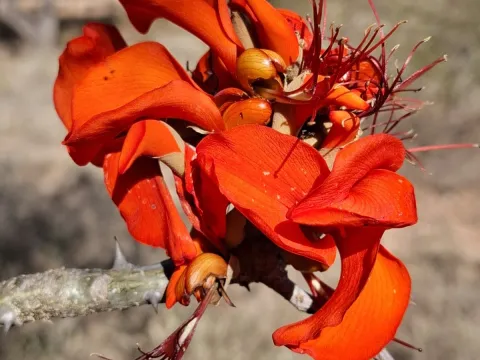
Erythrina velutina, commonly known as the velvet coral bean, is a deciduous tree belonging to the Fabaceae family. Reaching heights of 5 to 15 meters, the tree is characterized by its thick, corky bark and velvet-like pubescence on its leaves, which provides its common name and helps reduce transpirational water loss.
Native to northeastern Brazil, particularly the Caatinga biome, this species is highly adapted to semi-arid tropical climates. It survives in regions characterized by severe seasonal droughts, demonstrating remarkable resilience and physiological adaptation to harsh, nutrient-poor, and dry soil environments.
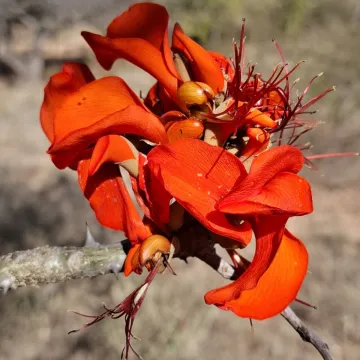
Botanically, the tree is a significant nitrogen-fixer, utilizing symbiotic relationships with soil bacteria to enrich the land. Its striking, bright red tubular flowers are a focal point, serving as an essential nectar source for various pollinators during the dry season when many other plants are dormant.
Agricultural management is relatively straightforward. The plant thrives in well-drained soils and requires full sun exposure. It is highly propagation-friendly, as cuttings often establish root systems rapidly, allowing farmers to plant living fences or fodder blocks with minimal initial investment in irrigation or specialized fertilizers.
The economic and agricultural utility of Erythrina velutina is extensive:
- Valuable source of high-protein forage for livestock during dry seasons.
- Effective use in agroforestry systems for windbreaks and living fences.
- Soil enrichment through nitrogen fixation and organic matter accumulation from leaf litter.
- Utilisation of its lightweight, versatile timber for local woodworking and rural crafts.
While the tree is hardy, it is susceptible to specific insect pests like weevils, which can bore into the stems or damage buds, and fungal pathogens under conditions of extreme moisture accumulation. Integrated pest management, including pruning affected branches and ensuring adequate site drainage, is key to maintaining healthy and productive stands.
Photo gallery