Description
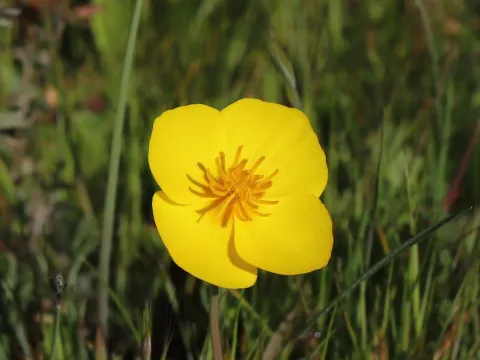
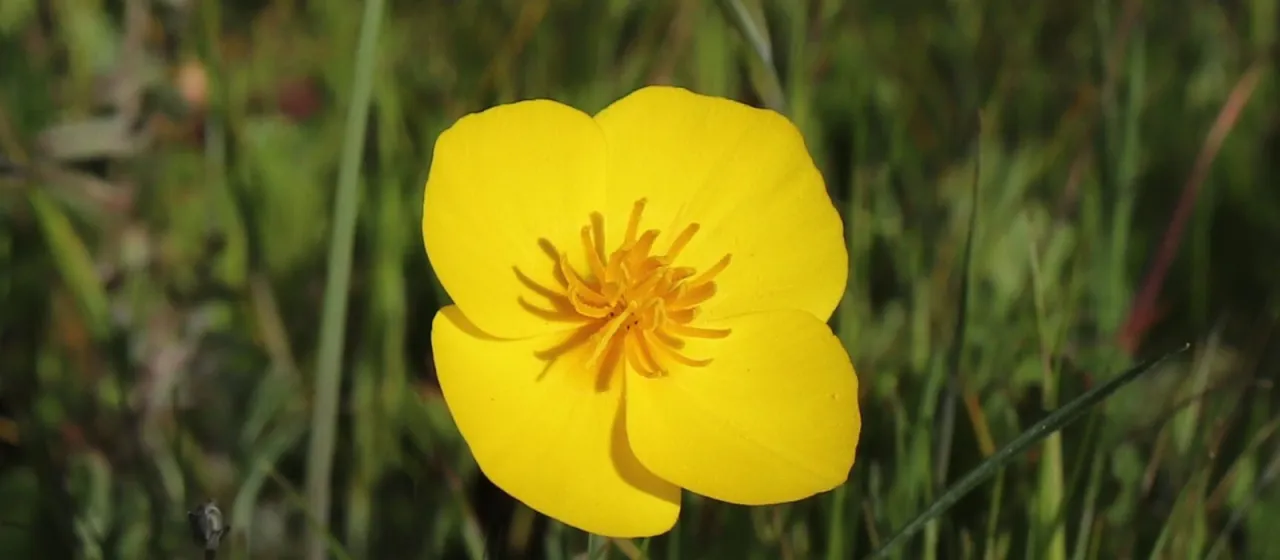
Eschscholzia lobbii, commonly known as the Frying pans poppy, is an annual herbaceous plant belonging to the Papaveraceae family. It is a distinctive member of the Eschscholzia genus, primarily recognized for its small size and prolific yellow flowering habit. Unlike larger poppy species, this variety maintains a low profile, making it a unique addition to specific planting schemes.
The plant originates from the grasslands and open valley meadows of California, USA. It is well-adapted to Mediterranean climates characterized by cool, wet winters and hot, dry summers. Its natural habitat includes rocky or sandy slopes, which defines its preference for specific soil conditions and its inherent ability to survive in nutrient-poor environments.
Botanically, it features finely divided, glaucous-green foliage and shallow, cup-shaped flowers that appear in shades of pale to golden yellow. The root system is a slender taproot, which is a key adaptation for moisture uptake in arid environments. This specific biological structure dictates that the plant is best suited for direct seeding in its permanent location.
Agricultural and gardening requirements focus on the provision of excellent drainage and full sun exposure. The species performs poorly in dense, clay-heavy soils or areas with excessive nitrogen fertilization. Maintenance is relatively minimal, as the plant is naturally drought-tolerant once established and does not require frequent pruning or chemical intervention for standard growth.
- Requires full sun exposure (at least 6-8 hours daily).
- Prefers sandy, well-draining soil types.
- Minimal water requirements once the plant is mature.
- Avoid transplanting; sow seeds directly in the ground.
The primary use of Eschscholzia lobbii is ornamental, often utilized in xeriscaping or native meadow restorations. Regarding plant health, it is generally robust, but gardeners should monitor for pests like aphids during the active growing phase. Proper spacing and avoiding over-irrigation are the most effective preventative measures against fungal pathogens like powdery mildew.
Photo gallery