Description
Espeletia pycnophylla is a perennial plant species belonging to the Asteraceae family. Known as part of the 'frailejones' group, it is a hallmark species of the high-altitude tropical ecosystems known as the paramo in the Andes of South America.
The natural range of this species is confined to the high mountains of Colombia, Ecuador, and Venezuela. It thrives at elevations between 3,000 and 4,500 meters, where it must withstand extreme environmental challenges, such as daily temperature cycles ranging from freezing at night to intense solar radiation during the day.
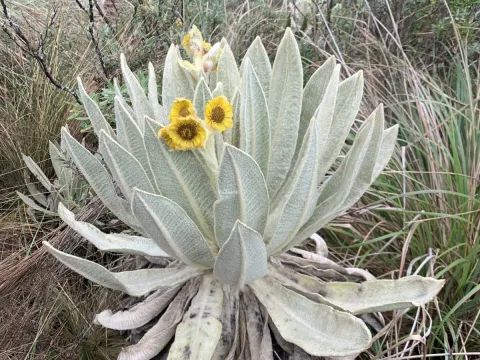
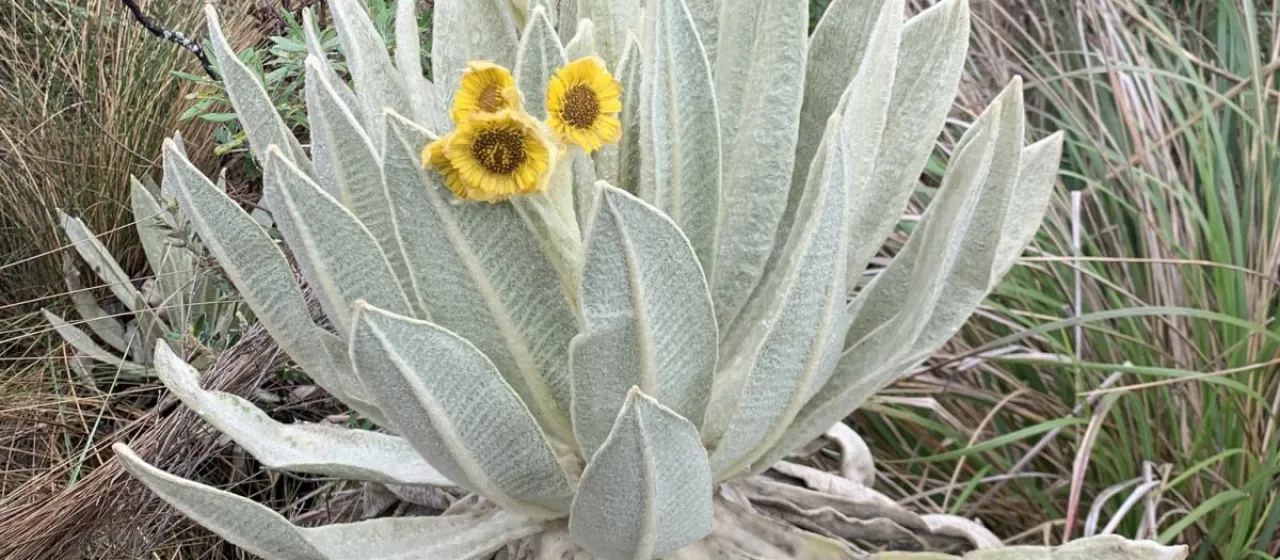
Botanically, the plant is characterized by a dense rosette of silver-green, hairy leaves. This pubescence acts as a thermal buffer, insulating the plant's delicate apical meristem from night frost and minimizing water loss. The plant exhibits a very slow growth habit, which is a classic adaptation to high-altitude resource scarcity.
Regarding soil and environmental requirements, the plant demands acidic, porous, and consistently moist soils. Cultivation outside its native paramo environment is extremely difficult due to its high specialization. Management efforts are almost exclusively focused on conservation and protection of its natural habitat from human-induced degradation.
Its primary economic and ecological function is hydrological regulation. Espeletia pycnophylla acts as a natural water reservoir, capturing humidity from clouds and releasing it slowly into the soil, thus feeding downstream watersheds. The species is susceptible to diseases related to root rot in disturbed or waterlogged conditions, and its populations are currently threatened by land-use changes.
Photo gallery