Description
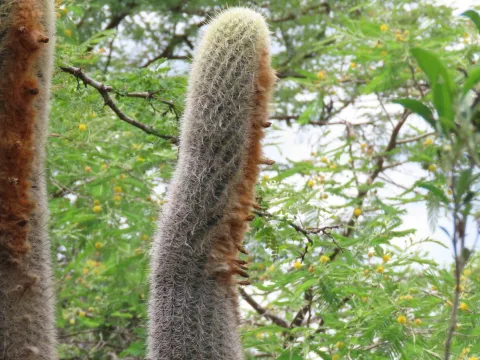
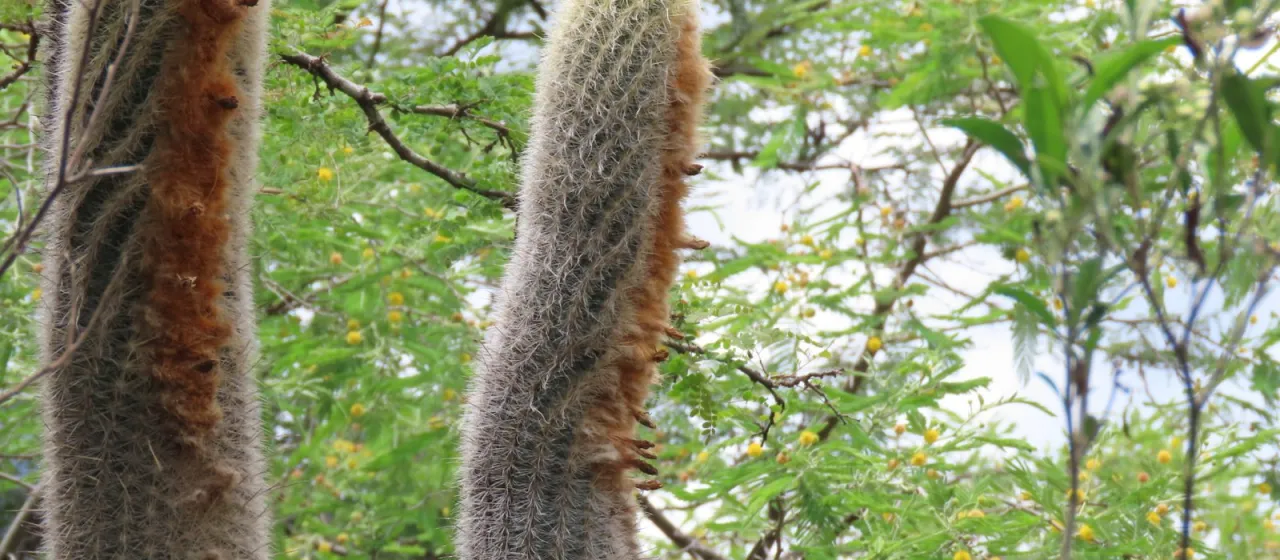
Espostoa lanata, commonly known as the woolly cactus, is a prominent member of the Cactaceae family. It is recognized for its tall, columnar habit and dense covering of white, hair-like spines that protect the stem from intense solar radiation. This species is highly regarded in the horticultural industry for its unique structural appearance and architectural value in succulent collections.
The plant originates from the high-altitude regions of the Andes in Peru and Ecuador. In these rugged, arid environments, the plant has evolved to survive on rocky terrain under harsh climatic conditions. It relies on nocturnal moisture from mountain mists, making it highly adapted to environments with extreme diurnal temperature fluctuations and minimal rainfall.
Botanically, Espostoa lanata develops a ribbed stem, with the ribs hosting areoles that produce both sharp spines and soft white trichomes. As the plant reaches maturity, it develops a lateral cephalia — a specialized flower-bearing structure. The flowers are typically nocturnal, nocturnal blooming being a common trait in this genus to attract specific pollinators such as moths or bats found in its native range.
For optimal cultivation, the species requires a well-draining, gritty soil mix that prevents water stagnation. It thrives in high-light conditions, preferably in a greenhouse or an outdoor setting that mimics its native environment. Watering should be infrequent, following a strict "soak and dry" method to ensure the root system remains healthy and free from fungal pathogens caused by excessive humidity.
- Use a coarse, mineral-rich potting medium.
- Provide maximum direct sunlight exposure.
- Maintain a cool, dry dormant period during winter.
- Ensure adequate ventilation to prevent pests.
Common agricultural challenges involve the management of mealybugs and spider mites, which can easily infiltrate the dense, woolly fibers of the stem. Effective control relies on early detection and the use of systemic insecticides or mechanical cleaning with isopropyl alcohol. With correct horticultural practices, Espostoa lanata remains a long-lived and resilient specimen, ideal for arid-land landscaping and professional greenhouse production.
Photo gallery