Description
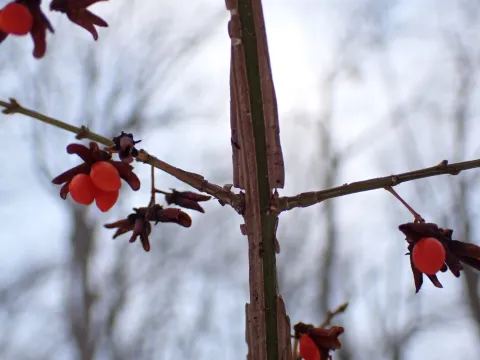
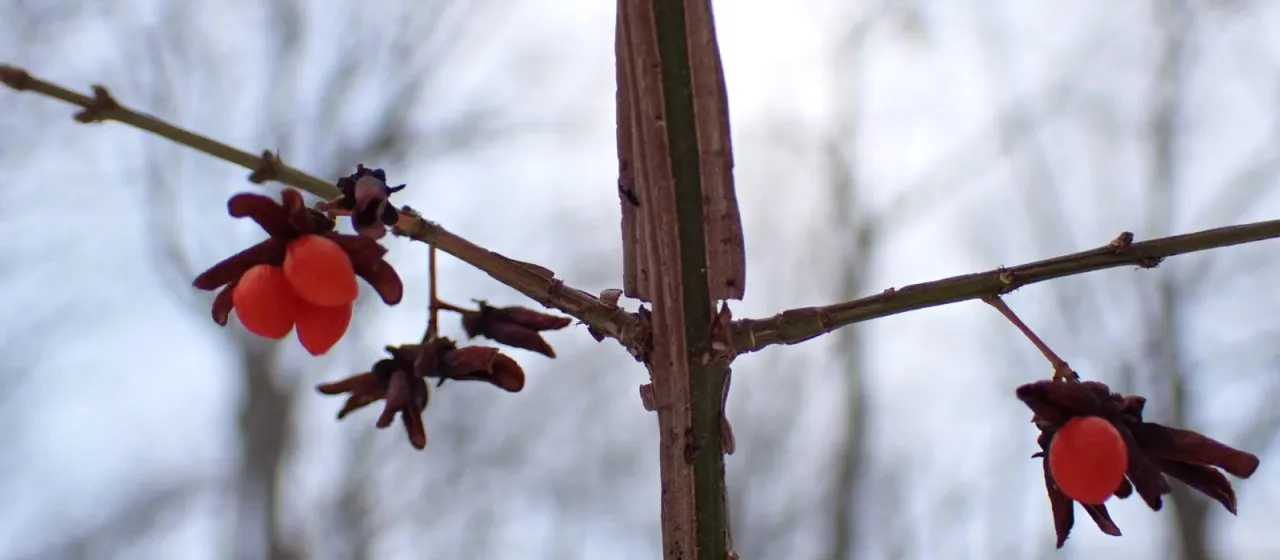
Winged spindle (Euonymus sacrosanctus) is a deciduous perennial shrub belonging to the Celastraceae family. This species is highly valued in horticulture for its remarkable ornamental properties, particularly its vibrant crimson autumn foliage and unique, colorful fruit with bright orange arils that persist well into the season.
The plant originates from the regions of the Far East, specifically extending across the Russian Primorye, the Korean Peninsula, and parts of northeastern China. In its natural habitat, it typically grows in the understory of mixed deciduous and coniferous forests, thriving in temperate climates with moderate humidity and partial shade.
Botanically, this species is defined by the prominent corky wings that develop on its branches as they mature, giving the plant its distinct structural appearance. The leaves are elliptical with finely serrated edges, while the root system is fibrous and shallow, requiring careful maintenance of the surrounding soil to avoid damage during weeding or cultivation.
From an agronomical perspective, the winged spindle is relatively hardy and adaptable. It performs best in fertile, well-draining loamy soils that are neutral to slightly alkaline. The plant is noted for its excellent winter hardiness and its ability to withstand varying degrees of light exposure, making it a reliable choice for diverse garden environments.
The primary use of Euonymus sacrosanctus is in landscaping and garden design, where it serves as an excellent specimen plant or as a component in dense hedgerows. Key considerations for successful maintenance include:
- Excellent tolerance to urban environmental stresses, including air pollution.
- Ability to withstand pruning, which allows gardeners to maintain specific shapes or sizes.
- Vigilance against common pests, such as aphids and euonymus scale, which can impact foliage vigor if left untreated.
Photo gallery