Description
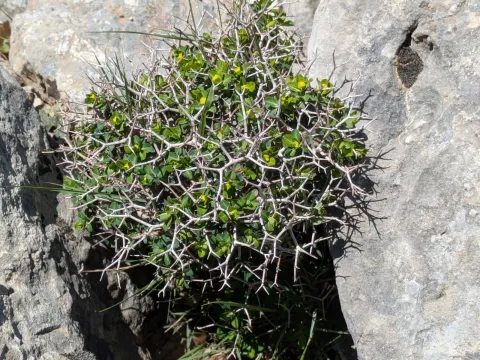
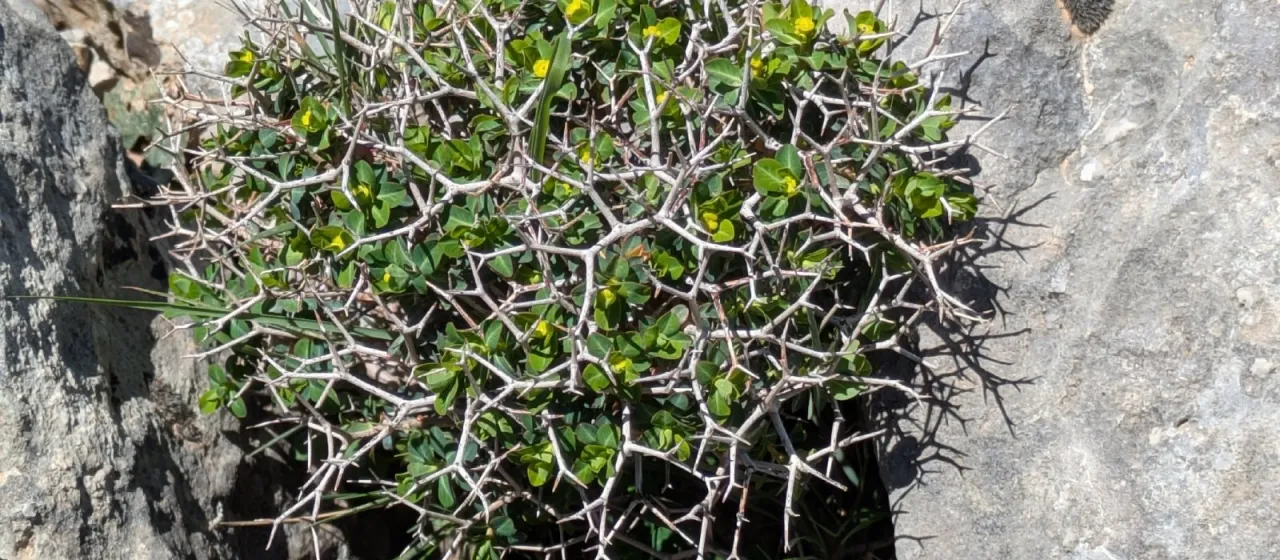
Spiny spurge (Euphorbia acanthothamnos) is a perennial, dense, cushion-forming shrub belonging to the Euphorbiaceae family. This distinctive plant is well-adapted to arid environments, characterized by its intricately branched, thorny structure that provides structural integrity and defense against herbivores in its natural habitats.
The native distribution of this species is centered around the Eastern Mediterranean, particularly across Greece and Turkey. It typically thrives in rocky, limestone-rich landscapes and nutrient-poor soils. Its evolutionary strategy allows it to minimize water loss by shedding leaves during the peak of summer, relying on its woody stems to maintain vitality.
Botanically, the plant is noted for its unique transformation of old flowering stalks into rigid spines, which cover the mound-like surface of the shrub. This morphology is an adaptation to harsh environmental factors such as high solar radiation and wind, which are common in its home range. The plant grows very slowly, often remaining compact for many years.
From an agronomical standpoint, the cultivation of Euphorbia acanthothamnos requires meticulous attention to substrate composition. The soil must be highly porous with excellent drainage to prevent root rot, as the species is intolerant of waterlogged conditions. It requires minimal fertilization and full sun exposure to maintain its characteristic dense, spherical growth habit.
The primary use of this plant is in specialized xeriscaping or Mediterranean-style gardens, where it serves as a structural ornamental element. While not a commercial agricultural crop, it remains a subject of botanical interest. Growers should handle the plant with caution due to the toxic milky latex contained within its stems, which can cause severe skin irritation.
- Sun exposure: Full sun required.
- Soil pH: Alkaline, limestone-based.
- Growth rate: Slow.
- Landscape utility: Rock gardens and desert landscaping.
Photo gallery