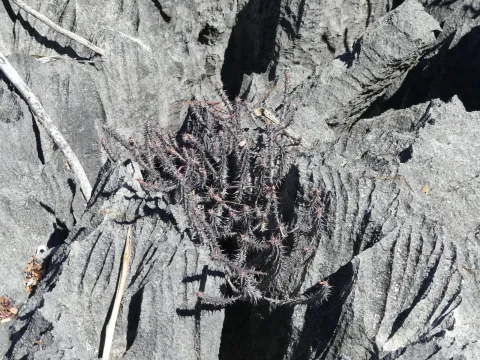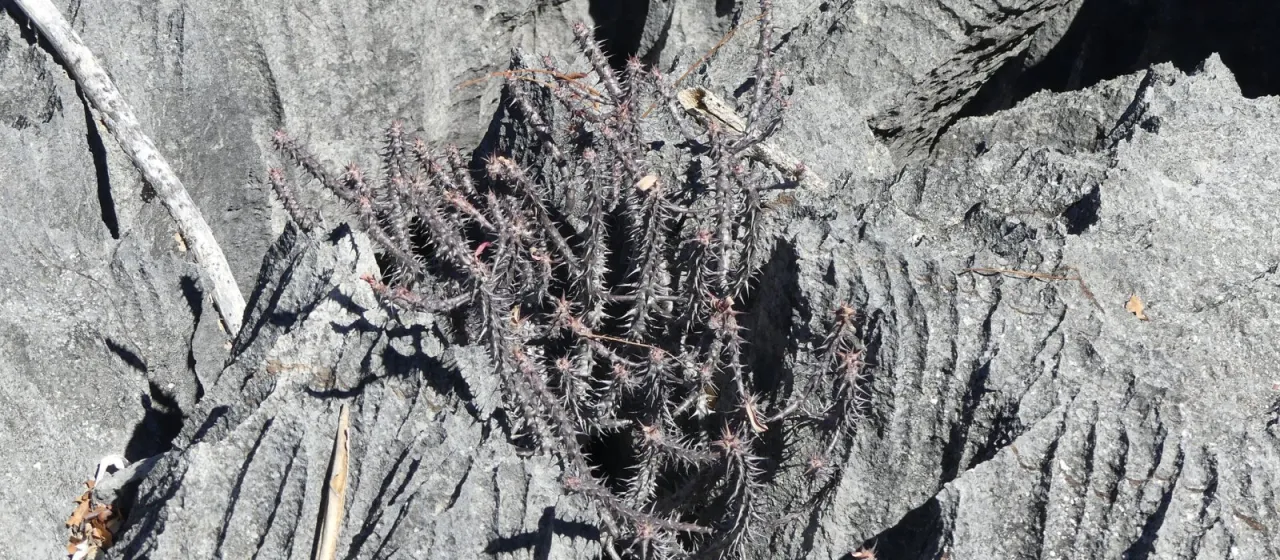
Description
Euphorbia ambarivatoensis is a rare succulent shrub belonging to the Euphorbiaceae family. Like many other members of its genus, this plant has evolved specialized morphological adaptations to thrive in harsh environments, making it a distinct and sought-after specimen for botanical collections and succulent enthusiasts worldwide.
This species is endemic to Madagascar, where it grows in specific ecological niches characterized by rocky substrates and fluctuating rainfall patterns. Its natural distribution is limited, which emphasizes the importance of preserving this species through careful ex-situ cultivation in specialized nurseries and botanical gardens.
Botanically, Euphorbia ambarivatoensis is defined by its succulent, often ribbed stems that serve as water reservoirs. The plant possesses a characteristic latex-filled sap, which is a common trait of the genus. During the growing season, it produces specialized inflorescences known as cyathia, which are typical for all Euphorbia species but exhibit unique structural details in this specific variety.
Cultivation of this plant requires a strict adherence to horticultural standards for arid-zone succulents. The primary necessity is a highly porous, inorganic substrate that facilitates rapid drainage. Overwatering is the most significant risk to the health of the plant, as it rapidly leads to root rot. Additionally, the plant requires high light intensity to maintain its compact growth form and overall vitality.
- Well-draining, gritty soil mix.
- Maximum light exposure with protection from scorching sun.
- Avoidance of excess humidity.
- Winter dormancy period with minimal water.
In terms of practical use, Euphorbia ambarivatoensis is primarily kept as a specimen for ornamental horticulture. While not a large-scale agricultural crop, its management requires professional knowledge of succulent husbandry. Common threats include mealybugs and spider mites, which should be managed with systemic pesticides only when the plant is not in a state of stress or dormancy.
Photo gallery