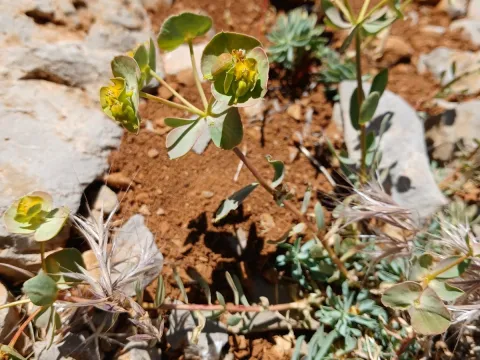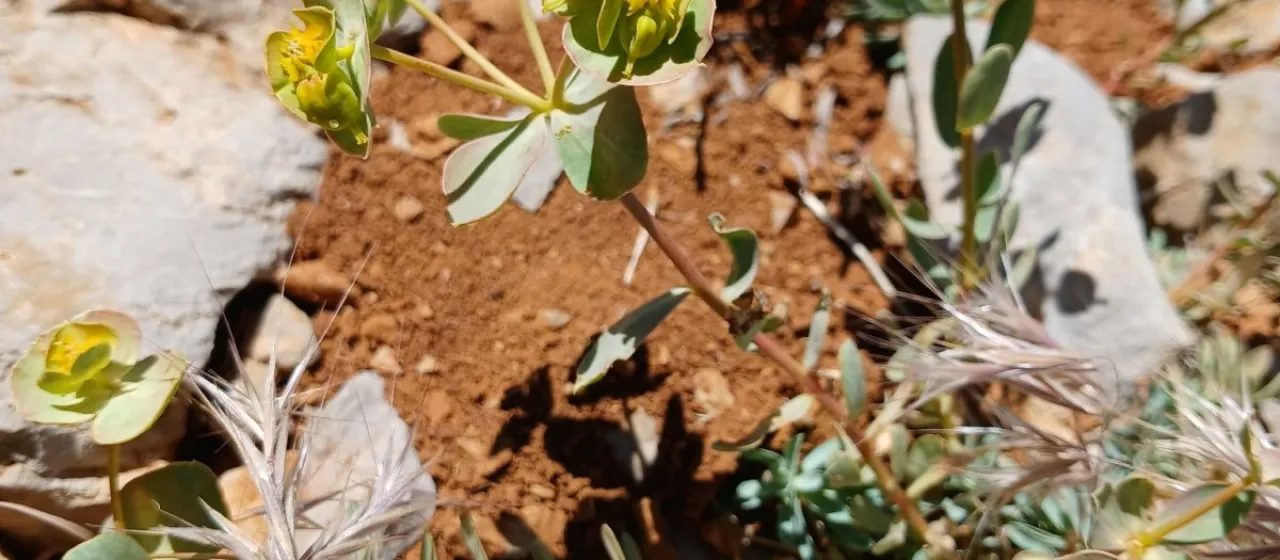
Description
Antilebanon spurge (Euphorbia antilibanotica) is a herbaceous perennial plant belonging to the diverse Euphorbiaceae family. It is recognized for its succulent characteristics, which have evolved to allow the species to thrive in harsh, water-limited environments within its native habitat.
The species originates from the mountainous regions of the Middle East, specifically the Anti-Lebanon mountain range. Its geographical distribution typically includes rocky slopes and arid terrains, where the plant has developed robust survival mechanisms to withstand extreme temperature fluctuations and significant seasonal droughts.
Botanically, this spurge is defined by its compact, often branched growth habit and the presence of milky latex, which serves as a defense mechanism against herbivores. The foliage is typically small to minimize water loss through transpiration, and the root system is highly efficient at extracting moisture from thin, rocky soils.
In terms of cultivation, the plant requires excellent soil aeration and mineral-rich, fast-draining substrates. It thrives in full sun exposure and is highly susceptible to root rot if the soil remains damp for extended periods. Agrotechnical management involves strict control of irrigation, particularly during dormant seasons when the plant requires very little moisture.
The primary utility of this plant is in the ornamental sector, specifically for xeriscaping and rock garden designs. Due to its drought tolerance, it is a valuable addition to dry climate landscapes. It is important to note that the plant's sap is toxic, requiring careful handling and placement away from areas frequently accessed by pets or children.
Photo gallery